
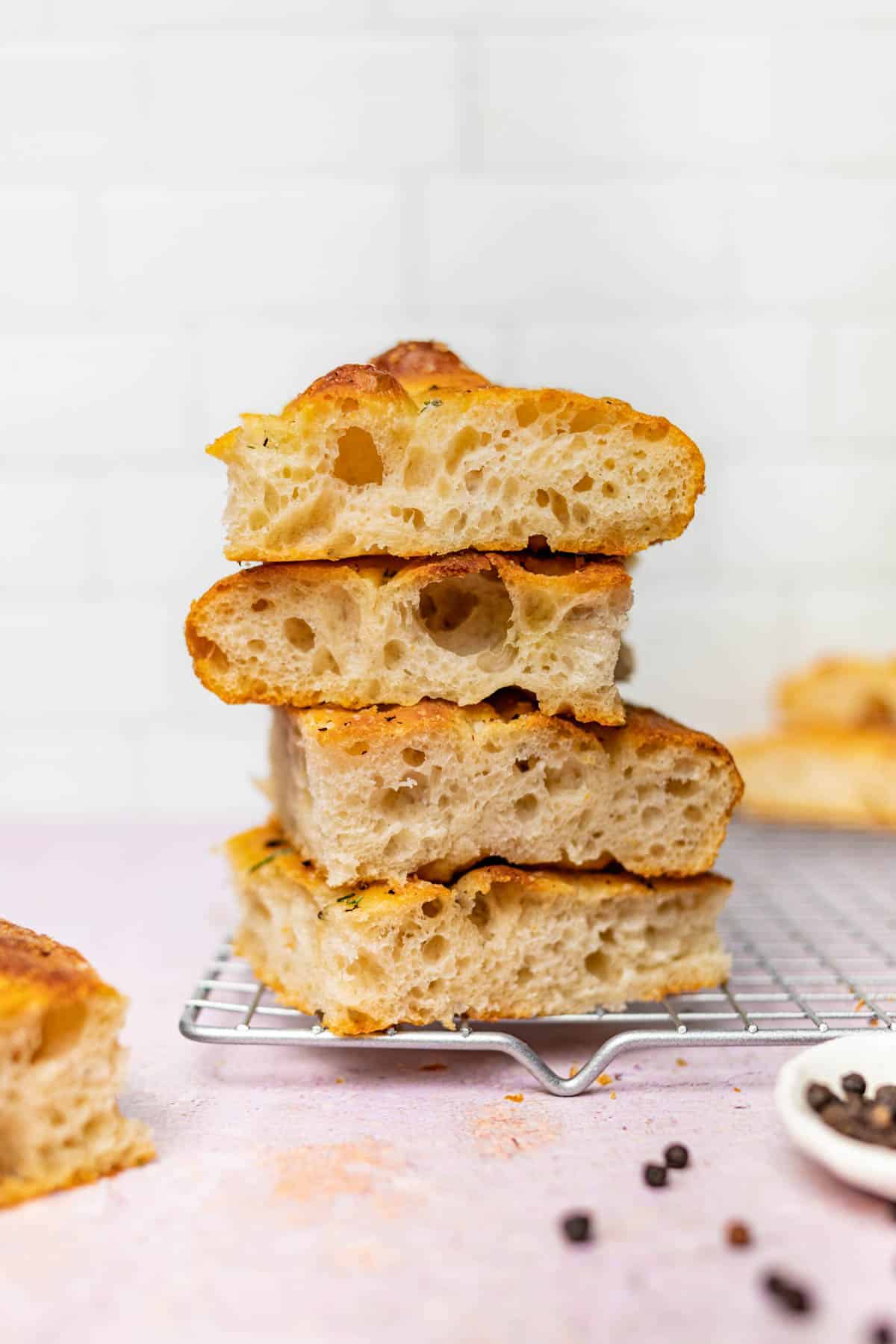
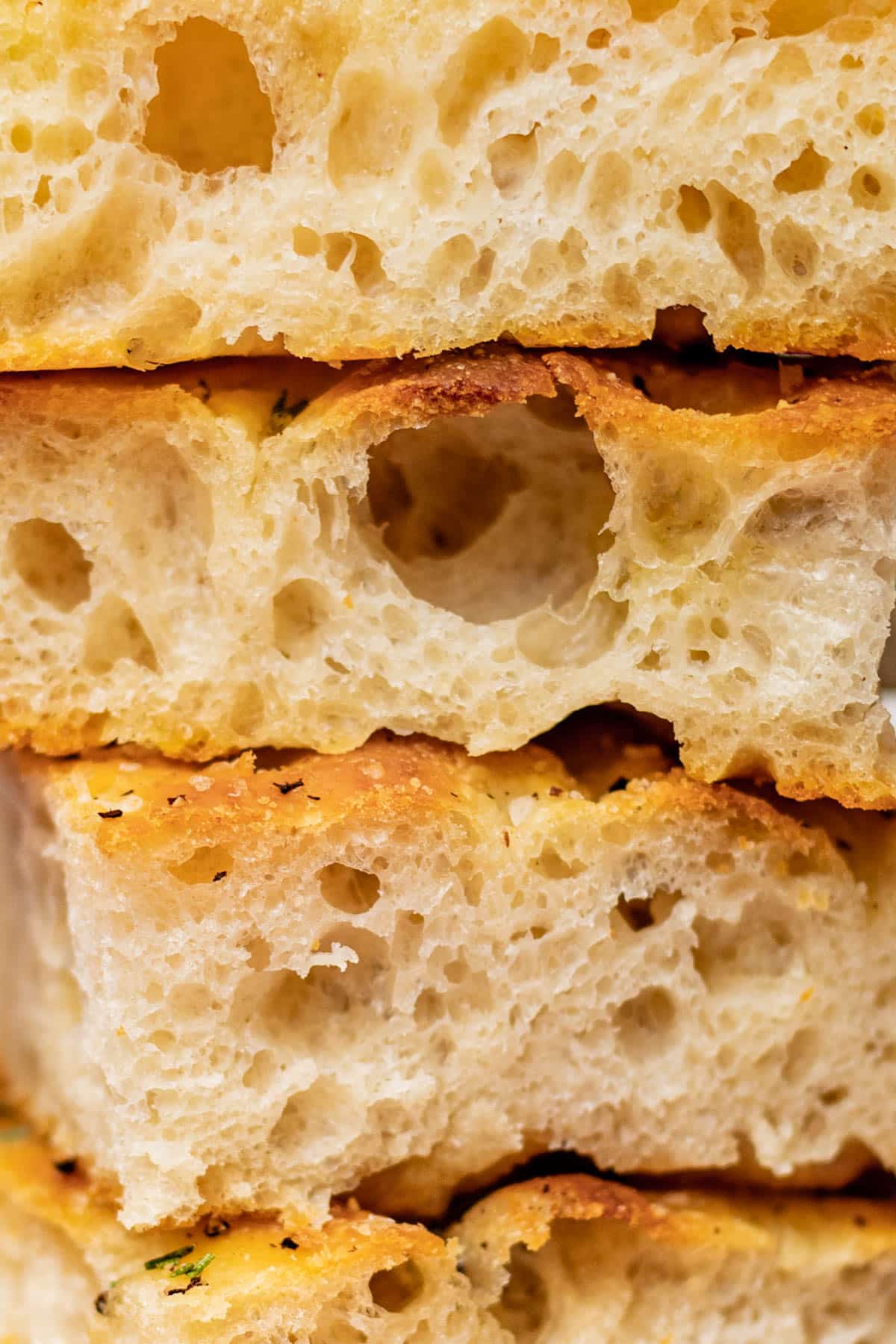
Crisp, soft, and with a wonderful olive oil flavour, sourdough focaccia is the ideal flatbread. With minimal shaping and no special equipment needed, it's also a great beginner's sourdough recipe.
Use the tastiest olive oil you have for the best flavour, and see below for some suggestions on toppings for your bread. We love basic salt and rosemary, but there are unlimited options, and focaccia can be so much fun!
We first shared this recipe in 2023. It’s been updated with improvements to the recipe instructions and more helpful information.
This post may contain affiliate links. If you purchase through these links, we may earn a small commission, at no additional cost to you.
Recipe Rundown: Sourdough Focaccia
Prep Time
10 minutes
Bake Time
25 minutes
Rise Time
12 hours
Servings
6 or more
Difficulty
Easy
Calories
356 kcal*
Primary Ingredients
Sourdough starter, all-purpose flour, olive oil, and salt.
*Calories are an estimation.
How This Recipe Works

Every baker should know how to make focaccia, and if you like naturally fermented bread, you should definitely know how to make sourdough focaccia. This recipe doesn't call for any added yeast, just starter. If that feels like it might be a little much for you at this point in your baking journey, try our sourdough discard focaccia.
Focaccia relies on the initial prove, what you might think of as the bulk ferment, for most of the rise. The goal is to knock as little air out as possible when turning the dough onto the oiled baking sheet so that it keeps that gas that's already present in the dough. Since it's sourdough, there is still a short secondary rise, but it's not as long as is usual for sourdough recipes.
It's a flexible, fun way to make a loaf of bread and you can add any number of toppings to get really creative with it. I developed this recipe and Sophie did the photos. We've all made this focaccia several times since it's such a staple sourdough recipe!

Ingredients You'll Need and Why
The most important element to a good focaccia is plenty of good olive oil. It'll be the main flavour point, even if you add strong-tasting toppings, and is a key part of the recipe. Otherwise you're looking at pretty standard sourdough ingredients. These are our notes from recipe testing, and you can find the full recipe card with complete measurements and instructions below.

- Flour: use either white or bread flour. We prefer bread flour when making sourdough bread, but all-purpose flour works just as well here since there's not as much of a structural requirement as for a boule. We haven't tested this recipe with whole wheat flour but you can try my spelt focaccia if you want an alternative flour type.
- Starter: active, fed starter that's just peaked. We have only made this with 100% hydration starter (white, whole wheat, and rye). This is not a sourdough discard recipe and your starter needs to be strong and more than just a few days old.
- Water: use room temp water for the best rise. Cold water will slow it down. You can try using just warm, skin-temperature water to speed up the proving time a little bit.
- Olive oil: don't sub another oil. Olive oil is a key flavour of focaccia and you should use one that you like.
- Salt: fine sea salt. If using kosher, increase the amount slightly. You could top with flake salt if you'd like.
Use the JUMP TO RECIPE button at the top, or scroll to the bottom of the post to see the printable recipe card with full ingredient measurements and complete instructions.
How to Make Sourdough Focaccia
Making the sourdough version isn't much different than a standard yeast version, really, especially in terms of time. The main difference is that sourdough focaccia rises at room temperature instead of in the fridge.

Step 1: water, honey, starter, and part of the olive oil in a large bowl, then mix in the flour and salt to form a shaggy dough. It will be pretty soft at this point.
Step 2: do three rounds of stretches and folds over the course of an hour, with 20 minutes between each round to let the dough rest. There's a bit less of a focus here on extremely strong gluten development because it's a flatbread.
Step 3: cover well and rise until doubled in size. I usually use a tea towel over the bowl and a large plate over that for a pretty much airtight seal that keeps the moisture in without needing to use plastic. The dough should be very bubbly and be very significantly larger when it's ready.
Step 4: turn the dough out and shape into a rough rectangle on an oiled pan, folding the sides in but trying not to knock too much air out of the dough. If the folding feels too tricky, simple tip the dough into the oiled pan and gently press into a rectangle instead. The folding adds a little more surface tension but isn't strictly necessary.

Step 5: rise again for at least an hour, then make the signature dimples and top as desired. This is the time to add any toppings you like, but always some more olive oil and salt.
Step 6: bake until golden and crisp. We recommend moving the dough from the pan as soon as possible to keep it crisp on the outside.
Expert Tips for the Best Focaccia
- Remove from the pan: taking the bread out of the pan almost immediately is to ensure the base of your sourdough focaccia stays crispy. If it cools on the baking sheet, it will soften from condensation and no one wants a soggy bottom.
- Chill before shaping: this isn't mandatory, but it will make the dough easier to work with if you're not so confident. Rise until doubled and then refrigerate for at least a couple hours before shaping.
- Keep oil under the bread: there must be olive oil under the dough before you set it aside to rise. Make sure to spread the oil out again on the pan before pressing the bread out.
- Adds herbs after baking: topping with herbs when the bread is fresh out of the oven has a couple of benefits. First, it prevents the burning that would occur if the herbs were baked. Second, adding them when the bread is still very hot releases the scented oils, bringing out plenty of flavour.
- Try a longer ferment: for a stronger sourdough flavour, the dough can be refrigerated for up to 24 hours rather than the shorter bulk ferment at room temperature.
- If the room temperature is warm: if your home is quite warm, we recommend making the dough in the morning so you can keep an eye on it, and prevent over-proofing. Or refrigerate for the bulk ferment, until doubled in size.
- Try a smaller dish: if you're not 100% confident with your shaping, use a baking dish that will prevent the dough from spreading out too much. This should be smaller than a cookie sheet - think more like a casserole dish. It'll prevent the focaccia from becoming too thin, even if the dough hasn't had the best shaping!
Focaccia Topping Ideas
- Bacon: use cooked crumbled bacon on its own or in combination with other toppings like onions.
- Blue cheese: a strong option, blue cheese is also excellent alone or with something meaty like bacon as in our blue cheese scones.
- Olives or capers: for a salty pop, try capers or chopped or whole olives.
- Fresh herbs: as outlined in the recipe, it's best to add them after the focaccia has baked, when it's fresh out of the oven. We recommend slightly woody fresh herbs like rosemary leaves rather than something like dill.
- Grapes: press whole grapes lightly into the dough before baking. If using fresh fruit and vegetables, note that the bread is best eaten the day it's made, because the spots around the fruit tend to soften from the added moisture.
- Goat cheese: less powerful than blue, crumbled goat or sheep cheese is excellent as a focaccia topping and forms a delicious golden shell when baked.
- Roasted garlic or caramelized onions: both add a little sweetness and a little sharpness from the alliums. These are my personal favourites.
- Za’atar, Dukkah, or another mix: use store bought or homemade and add it along with the salt. Dried herbs shouldn't burn while the bread is baking.
If you make this Sourdough Focaccia or any other sourdough recipes on the Baked Collective, please take a moment to rate the recipe and leave a comment below. It’s such a help to others who want to try the recipe. For more baking, follow along on Instagram, TikTok, and YouTube.
Sourdough Focaccia
Equipment
- Measuring cups and spoons or a digital kitchen scale
- Mixing bowl
- Wooden spoon
- Tea towel
- Plate
- baking sheet
- Wire rack
Ingredients
- 100 grams active sourdough starter
- 250 grams water
- 2 teaspoons honey
- 120 ml olive oil, divided
- 400 grams all-purpose or bread flour
- 10 grams sea salt, plus more for topping
Additional ingredients
- Olive oil, for drizzling, plus any other focaccia toppings
Instructions
- Add the starter a large bowl. Stir in the water, honey, and ¼ cup (60 ml) olive oil, mixing to combine.
- Add the flour and salt to the bowl and mix with a wooden spoon until a soft dough forms.
- Rest the dough for about 10 minutes before doing a round of stretches and folds. Repeat this twice more, once every 10 minutes, for a total of three rounds.
- Cover the bowl with a damp tea towel and a large plate. Let it sit out at room temperature overnight, or for about 12 hours. It should be doubled in size after this time.
- Add the second ¼ cup (60 ml) of olive oil to the base of a baking sheet and place the dough onto it.
- Fold the dough into a rough rectangle, lifting and pulling one side toward the centre and repeating with each side until all 4 have been folded in.
- Flip the dough seam side down onto the pan, making sure there’s oil under the dough.
- Use your hands to gently stretch the dough out to the edges of the pan until the pan is almost filled or the dough is about 3 cm (1 inch) thick. Try not to knock too much air out.
- Cover the dough, or place it into the oven with the door closed, and rise a second time for at least 1 hour, or until almost doubled in size again. (This may need up to 4 hours, depending on how active your starter is.)
- Preheat oven to 425°F (210°C). Oil your hands and use the tips of your fingers to gently press into the dough to create dimples all over the surface.
- Top the dough with anything you’d like (see the topping ideas for inspiration), drizzle with olive oil, and add a sprinkle of salt.
- Bake for 25-30 minutes, or until the top and sides of the bread are a dark golden colour.
- Top with finely chopped herbs as soon as it comes out of the oven, and remove from the pan as soon as you can to cool on a wire rack for 10 minutes before cutting and serving.
- Focaccia is best fresh, but can be stored for a few days in an airtight container, or frozen up to a month.
Notes
Nutrition
Nutrition information is an estimate and is provided as a courtesy. For precise nutritional data, please calculate it independently using your preferred nutrition calculator.
This post may contain affiliate links. If you purchase through these links, we may earn a small commission, at no additional cost to you.
 Did you make this recipe?Please consider leaving us a rating and a comment. It helps others find our work, which genuinely supports what we do. Thank you!
Turned out great!
Can I refrigerated it before baking, during the 1-4 hour second rise? I can't make this all in 1 day.
Hi Susan, I don't see why not, but we haven't tested it. I would probably line the baking dish with parchment paper just to be on the safe side if you do that, but I think it could be in the fridge overnight before baking.
Soooo good! More moist and doesn’t require butter so healthier than regular sourdough!
regular sourdough made at home is just flour, water, salt and starter. it's not unhealthy.