
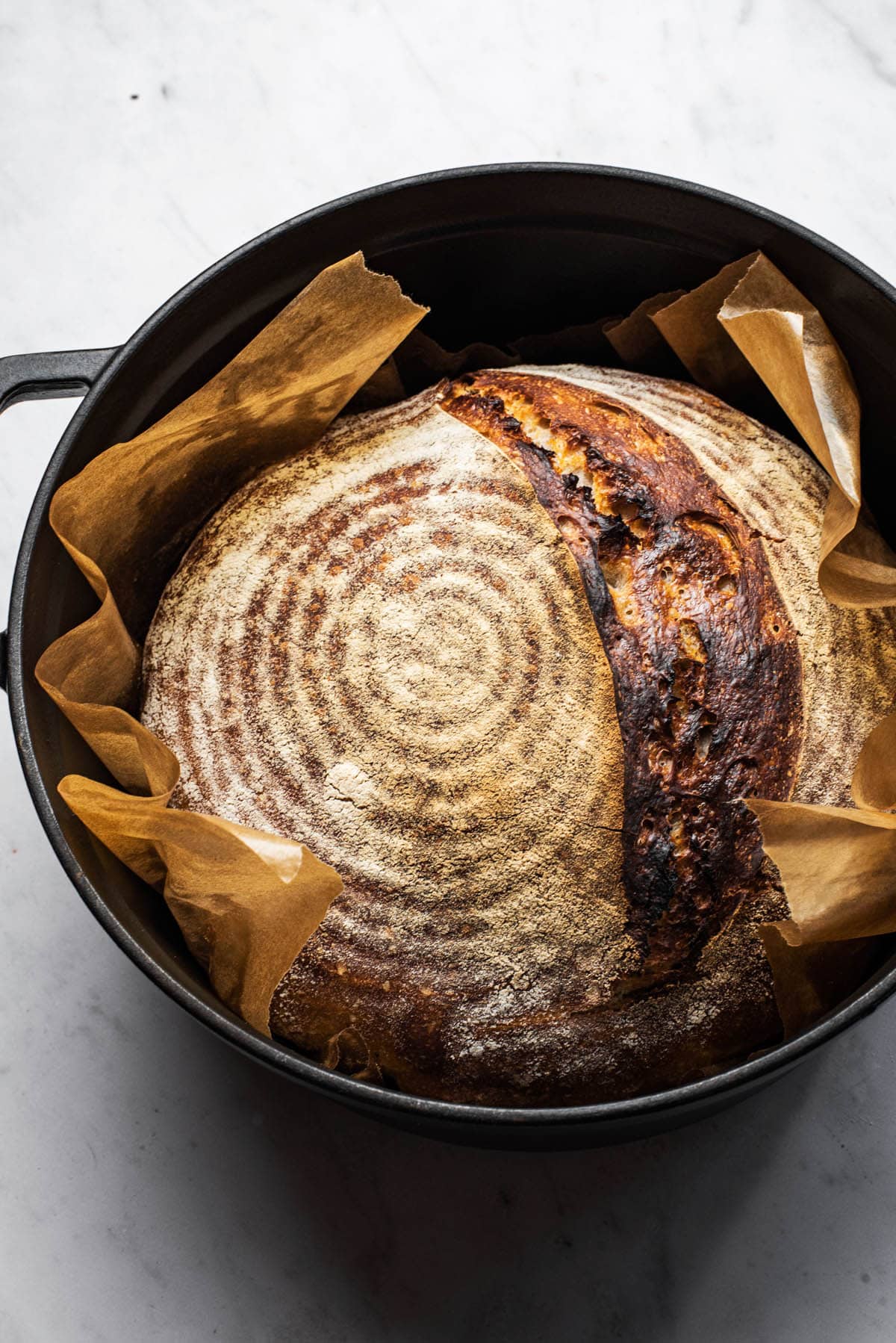
This easy, flavourful sourdough bauernbrot is made with a mix of rye and bread flour. A dream to shape and perfect for sandwiches! The addition of rye makes for an excellent flavour, but keeping white bread flour makes for a good crumb due to the higher gluten content, and doesn't overwhelm the way dark rye bread can if you're not used to it.
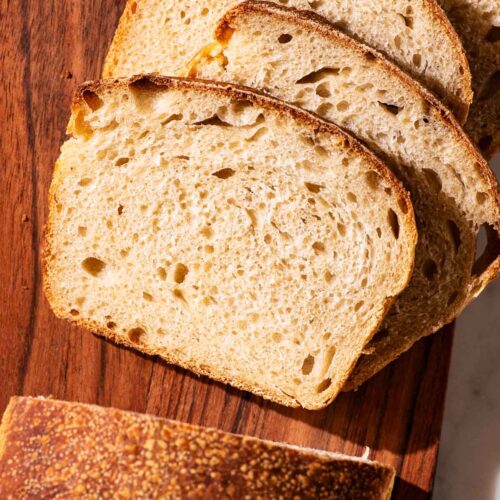
This loaf has a relatively small crumb and it's not meant to be really open and airy. That means it's perfect for sandwiches of all kinds, because your toppings won't fall through. Try our 100% whole wheat sourdough bread and sprouted grain sourdough too if you like a heartier bread.
One reader, Barbara, commented: "Love this recipe. It tastes so authentic, I can close my eyes and pretend I'm eating this back home in Germany."
Another reader, Shana, said: "Love this! I used to live in Germany and have been looking for a good recipe for bread. I’ve made it twice, and my whole family loved it. This time I soaked my rye beforehand, let’s see how it impacts the flavor! Thank you!"
Jump to:
Ingredients

Ingredient Notes and Substitutions
- Rye flour: depending on how wholesome of a loaf you want, you can use different types of rye flour. This will also depend on what's available to you. I use sifted (light) rye, but whole grain will work just as well and will add a more noticeable rye taste.
- Water: if you want to, it is possible to use milk in place of water here. It will make the dough slightly softer, but doesn't make such a difference. If you have leftover whey, it's a very good sub for water.
- Bread flour: if bread flour isn't available, plain white can be used in a pinch. We have several other sourdough recipes using white flour which are specifically developed with that in mind, so we would recommend going for one of those instead.
- Starter: this should be 100% hydration starter at its peak, and can be made with rye, white, or any type of flour that contains gluten.
Use the JUMP TO RECIPE button at the top, or scroll to the bottom of the post to see the printable recipe card with full ingredient measurements and complete instructions.
Method
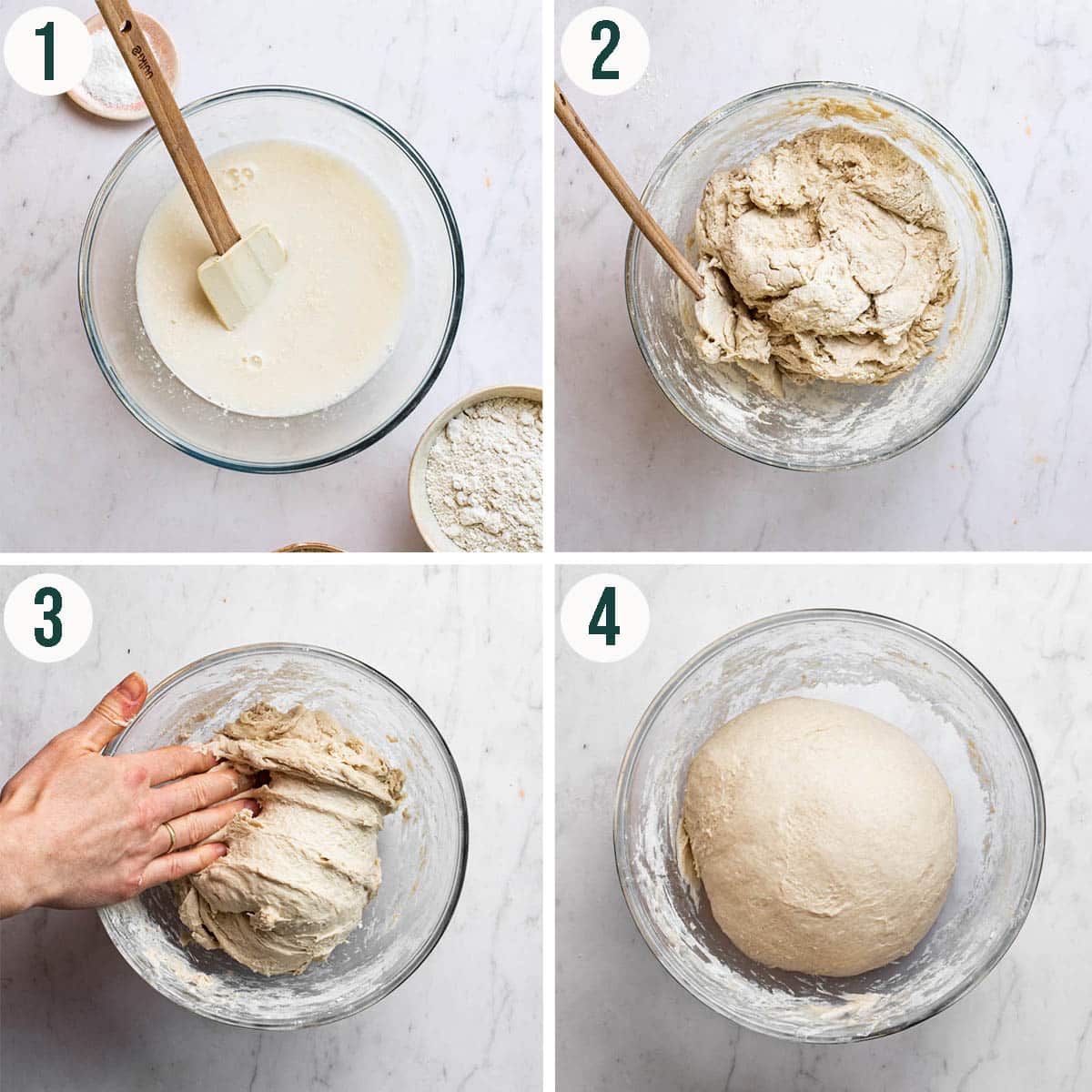
Step 1: add the starter and water to a large mixing bowl and combine.
Step 2: stir in the flour to form a shaggy dough. The dough will seem dry.
Step 3: do three rounds of stretches and folds.
Step 4: form the dough into a smooth ball.
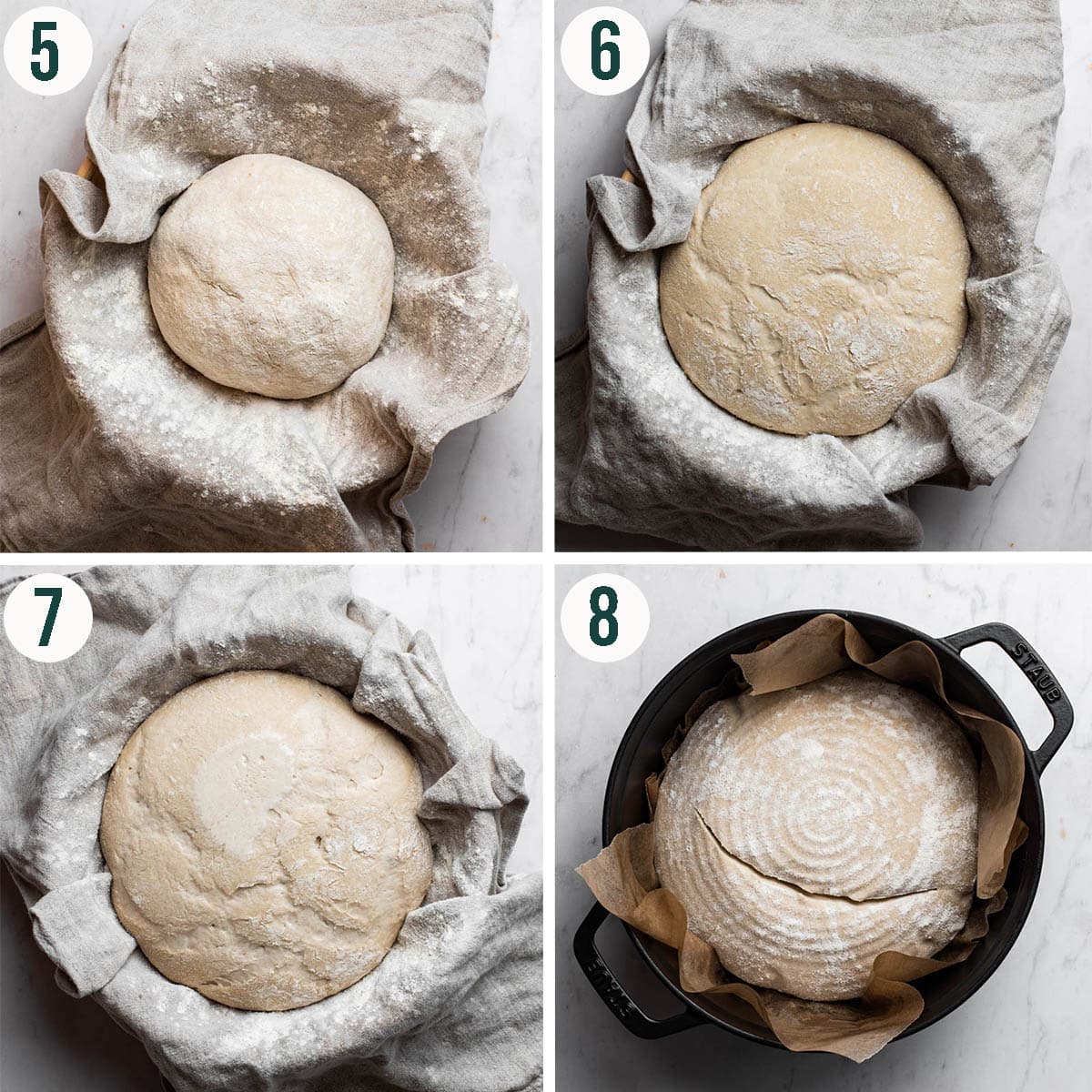
Step 5: transfer the dough to a lined proving basket.
Step 6: let it rise for a few hours at room temperature.
Step 7: transfer the dough to the fridge, covered well, to rise overnight.
Step 8: turn out onto parchment and bake in a pre-heated Dutch oven.
Top Tips
- Start with the basics: if you're unfamiliar with the terms used, see these posts on how to stretch and fold sourdough and how to shape sourdough boules.
- Make it without a banneton: it is possible to place the shaped bread into a bowl lined with a tea towel if you don't have a proving basket. A smaller bowl (not a mixing bowl, but more medium-sized) is best.
- Cool fully: any recipe with rye flour really benefits from a full cooling down period before slicing. All sourdough should, ideally, cool before being sliced. This loaf will be gummy if sliced when warm.
Recipe Notes
This is a low hydration dough and is easier to work with for beginners. If you're used to higher hydration, it may seem too stiff, but it isn't. After the autolyse it softens up a bit and once the stretches and folds are complete, it will be soft and smooth like any other dough. The dough is shaggy and very sticky when first mixed due to the rye flour.
This is a classic recipe in German-speaking countries. I (Alex, northern Germany) always make it with water, but in the southern regions you may find bauernbrot (farmer's bread) more often made with milk. This makes for a softer loaf and you can use milk if you want to.
The pot doesn't need to be preheated for this recipe to be successful. Heating in advance will result in a slightly greater oven spring, but if you're not so confident placing the dough into a very hot pot, then put the bread in cold. The loaf pictured was baked in a cold pot and it makes virtually no difference for this recipe.
How to Store
Storage: keep the bread in a large paper bag, cloth bag or linen/cotton tea towel, or in a bread bin. It will keep at room temperature for several days.
Freezing: transfer fully cooled bread or individual slices to an airtight container and freeze for up to a month. Slices can be thawed directly in the toaster.

FAQ
What is Bauernbrot made of?
It should be made with just rye flour, bread flour, starter or yeast, salt, and water or milk. Some people add brotgewurz or caraway but not everyone likes the spices.
Is Bauernbrot healthy?
Since it usually contains part whole grains - rye - it can be a healthier option than plain white bread as it will contain more fibre and some nutrients.
Why is German bread so good?
German bread recipes use a variety of grains rather than only wheat flour – rye, spelt, emmer, and more. The recipes are also very highly regulated so you can trust that the bread from any German bakery is going to be comparable to any other, and always taste like it should.


If you make this German Sourdough Bread recipe or any other sourdough bread recipes on the Baked Collective, please take a moment to rate the recipe and leave a comment below. It’s such a help to others who want to try the recipe. For more baking, follow along on Instagram, TikTok, and YouTube.
Sourdough Bauernbrot (German Farmer's Bread)
Equipment
- Mixing bowl
- Wooden spoon or spatula
- Tea towel
- Banneton proving basket
- Dutch oven
- Wire rack
- A digital kitchen scale
Ingredients
- 350 grams water, at room temperature
- 100 grams active sourdough starter, 100% hydration
- 400 grams bread flour
- 150 grams rye flour
- 10 grams sea salt
Instructions
Day One
- Add the water and starter to a mixing bowl and mix until fully combined.
- Add the bread flour, rye flour, and salt to the bowl. Mix with a wooden spoon or spatula until a shaggy dough forms.
- Cover the dough with a tea towel and set aside for 30 minutes.
- Once a half hour has passed, do three rounds of stretches and folds over the course of an hour, one round every 20 minutes. The dough will be sticky but will come together as the folds are completed.
- Shape the dough into a boule and sprinkle the top with flour. Place it, seam-side up, in a proving basket (banneton) lined with a tea towel.
- Cover the dough and set it aside to rise at room temperature for three hours.
- The dough should look slightly puffy but not doubled in size. Cover with a plate and refrigerate for 8 hours or overnight.
Day Two
- Preheat the oven to 500°F (260°C). The pot (dutch oven) can be heated with the oven but this is optional (see notes below).
- Once the oven is hot, remove the dough from the refrigerator. Carefully tip it out onto a piece of parchment paper and score the top.
- Reduce the oven heat to 450°F (230°C).
- Carefully remove the pot from the oven if you chose to preheat it. Place the dough into the pot and bake for 20 minutes with the lid on.
- Remove the lid and bake for another 15-20 minutes, or until the loaf is golden brown.
- Carefully lift the bread out of the pot (use the parchment paper as handles) and cool fully on a wire rack before slicing. Store leftover bread in the same pot you baked it in, or wrapped in a tea towel and stored in the oven.
Nutrition
Nutrition information is an estimate and is provided as a courtesy. For precise nutritional data, please calculate it independently using your preferred nutrition calculator.
This post may contain affiliate links. If you purchase through these links, we may earn a small commission, at no additional cost to you.
 Did you make this recipe?Please consider leaving us a rating and a comment. It helps others find our work, which genuinely supports what we do. Thank you!
Wonderful recipe crumb is soft and fragrant and the crust is not too chewy. Great for open-faced sandwiches and slices well. I used a San Francisco sourdough starter and the flavor was wonderful. I used to order Bauernbrot online but this recipe lets me have the freshest bread at a fraction of the cost plus it is homemade!
Great recipe - Easy to follow and to execute. Wunderbar!
Delicious !
The flavor is spectacular but the bread is very dense. I did take it out of the fridge for an hour before baking. Any suggestions on how to get it a little more airy? Thanks so much
Hi Mel, sounds like it's probably just a proving issue. I would let it rise at room temperature for an extra couple of hours before refrigerating. Check for signs of good proving - it should be quite puffy already before chilling.
Perfect! We lived in Germany for several years and have tried unsuccesfully to replicate the bauernbrot we ate there. This came closest. Thank you, - the crust and crumb were amazing! I added 2 Tblsp of King Arthur Rye Bread Improver, used Pumpernickel for the Rye flour, put a little olive oil on the top, wiped olive oil on the baking paper and dusted it with corn meal and a little kosher salt.
My first time baking with sourdough and rye flour together. My dough was a little sticky as I was trying to form it into shape. (Anything I did wrong) It rose beautifully, but than I made the mistake of taking it out of the fridge before baking (wasn’t paying attention to the instructions ) for an hour or so, baked it anyway as per instructions. The crust was beautiful, inside nicely done , but a little airy. Is there anything I can do to make it a little denser. All in all, great recipe. That I will make again and again. Thanks so much
Hi Ingrid, a little stickiness is normal with rye bread, even if it's been mixed properly and kneaded (stretched and folded in this case) well. Next time leave it in the fridge until right before baking and you should get a slightly denser texture. If you want a really German dense bread then you'll need a recipe that uses more whole grains - you can also try my sourdough rye bread made with spelt flour instead of white flour for the type of loaf it sounds like you're looking for. Bauernbrot is a relatively soft rye bread by design.
I’m in the midst of making this now! I LOVE bauernbrot after 3 years in Germany. Unfortunately I don’t have a Dutch oven…are there any tweaks you would suggest I’d I’m baking without a Dutch oven? (I was considering fashioning one out a ridiculous amount of aluminum foil but the juice may not be worth the squeeze on that idea.)
Hi Meaghan, I think your best bet would be to bake it on a baking sheet with steam in the oven. Use an oven-safe baking dish that can withstand a temperature shock and add some ice to it when you place the loaf in the oven and it should be very similar to baking in a dutch oven.
I have been adding 2 tsp sesame seeds and 2 tsp caraway seeds to this with a little extra water (8g or so) and it’s turned out good. I picked up a 6 seeds mix and would like to add this to the recipe, but more than I’ve been using. The mix has brown & golden flax seeds, sunflower seeds, sesame seeds, black chia seeds, and pumpkin seeds. I’ve seen recipes where people have soaked the seeds in an equal amount of water (ex: 50g seems in 50g water). How would you suggest I do this? I see you have a seeded sourdough recipe, but I like this one. 🙂
Hi Britta, sesame and caraway sound great! If you're going to use seeds that absorb a lot of moisture, like the flax and chia in your mix, then I would definitely recommend soaking in an equal amount of water before adding to the dough. Treat it like a flax or chia egg and mix with the water at least five minutes ahead of time, then add to the dough before starting your stretches and folds. The seed sourdough bread was developed specifically with those seeds so you do need to add a bit more moisture to the bauernbrot if you plan to add them. Soaking first should work well though and I think it'll taste fantastic.
Thank you! I’ll try to remember to let you know how it turns out. 🙂
Hi, I'd like to make this bread tomorrow but I have a question.
Why do you do the bulk fermentation in the proofing basket? I would rather shape it as a batard so I can slice it up and freeze in slices, so I can pull out a slice of rye bread when I want one (also because I only have oval bannetons!). I should shape it before bulk fermentation? I've never done that before. Do I shape it the traditional way, creating tension, or there's no point prior to bulk fermentation?
And a side question: Why is there a black streak at the bottom of your loaf?
Hi Leah, this is a method we use a lot, and it's something Sophie learned when working in an artisan bakery for several years. You shape as instructed, just like you'd normally shape, creating surface tension, and the loaf can be shaped as a batard instead of a boule. Just follow the instructions and you'll be fine.
I think what you're referring to as a black streak is a shadow, in the photo showing the cut loaf? That's just a shadow from the window.
That's so interesting! Do you only use it for this bread or for all sourdough breads? I couldn't really shape it the typical way because the dough was still so stiff. I ended up leaving it out for six hours. The kitchen was colder than usual and I didn't see any of the typical bulk fermentation signs, like a jiggly, airy dough. I got decent oven spring though. I'll have to update this when I actually cut into it, but right now it's in the freezer. I appreciate your very quick response, that's quite unusual for an older recipe!
Do you mean yeast (which gets added to water & rest between 10-20minutes or having people make a sour dough starter?
Hi there, this is a sourdough recipe, and should be made with an active sourdough starter as outlined in the recipe.
This Sourdough Bauernbrot turned out absolutely fantastic. The flavor, texture, and crust instantly reminded me of the bread I’ve had on my many trips to Germany — truly authentic and so satisfying. I followed the recipe exactly as written, and the result was a beautifully textured loaf with a wonderful crust.
My family’s reaction was completely over the top, and the bread didn’t even last two days. Thank you so much for such an excellent recipe!
Quick question: I started with an all–AP flour starter and fed it 1:1:1 with rye flour. I have some starter left and would love to get the same results next time — would you recommend continuing to feed it with rye, or switching back to all-purpose flour?
Hi Bart, glad you liked the recipe - I always make this loaf when I'm not in Germany, too. For the starter, I always feed mine with rye, and the photographed loaf would have been made with a 100% rye starter as well. I'm sure you'd get a good result using AP flour to feed your starter. My preference for rye, apart from flavour, comes down to longevity as it has a longer peak time.
Great recepie, Thank you very much!
First of all thank you. Thank you for taking the time to write this recipe. We had a marvelous German brown bread while in Austria a few years back. I have been dreaming about this bread ever since.
I made this but tweaked it slightly, after looking at multiple recipes online. I added caraway seeds, I know it’s not traditional, but I like it. I also used 200gm Rye flour and reduced the BF to 350gm. It came out great. I would definitely make this again.
The flavor and crust was perfect but by the 4th slice I had a huge hole what did I do wrong
Thanks so much for trying the recipe Patricia. A big hole in the middle can usually mean one of two things. One, the dough may have been slightly under-proofed (didn’t rise quite long enough before baking) or two, it may not have been shaped tightly enough before going into the banneton. Even with the hole, we're glad to hear the flavour and crust were on point!
Baked a loaf just this morning. Only thing I did different was added caraway. It turned out great!
Amazing Lynette, thanks for letting us know!😍
Excellent recipe! Thank you for sharing.
I realized that you answer my question in the recipe card. I had just read through the 'method' at first.
I'm looking forward to making Bauernbrot as it reminds me of one of my favorite breads I ate growing up.
Hi Jessi, sorry about that - we hope you like the recipe!
Do you bake this bread uncovered?
Will a 9” proofing basket work for this?
Hi Britta, yes, that'll be fine.
Hi, you are using a liner in your proofing basket. Once cooked, you have the lines the banneton, how is this possible?
Hi Carole, if you look at the step-by-step photos, you can see that the turned-out loaf before baking also has the lines on it. I used a pure linen tea towel for the pictured loaf and some of the moisture from the bread transfers through that, introducing lines from the banneton into the flour coating the bread. It doesn't leave indents so much the way proving in a banneton with no tea towel does but there is a slight impression.
This recipe is my new favorite!! The process is easy and the flavor is on point! Such a subtle taste of earthy rye with hints of sourdough flavor. My two favorite breads in one…. I’m in heaven!!!!
Love this! I used to live in Germany and have been looking for a good recipe for bread. I’ve made it twice, and my whole family loved it. This time I soaked my rye beforehand, let’s see how it impacts the flavor! 🙂 Thank you!
Love this recipe. It tastes so authentic, I can close my eyes and pretend I'm eating this back home in Germany.
light and flavorful
I have been looking for so long for a good bauernbrot that would bring me back to my childhood visits to Germany. This recipe did the trick. I am so happy. It took a couple tries and tweaking things and I had great success. Thank you! The changes I made was using 100gm rye, 100gm whole wheat, and 350 gm bread flour and adding 2 tsp diastatic malt powder. With another loaf, I tried using a dark beer instead of the water. Germans love their beer of course!
Hi Antje. Im excited to try this recipe. I miss my Bauernbrot between Germany trips. Can you tell me what the malt powder does? And how did it taste with the beer substitute?
Thanks,
Britta
I make this bread all the time. Great loaf for slicing and making sandwiches. Thank you for a great recipe!
Great recipe! Reminded me a lot of the fresh bread I used to get from a German bakery as a kid .The recipe is easy to follow I will definitely make it again ❤️