
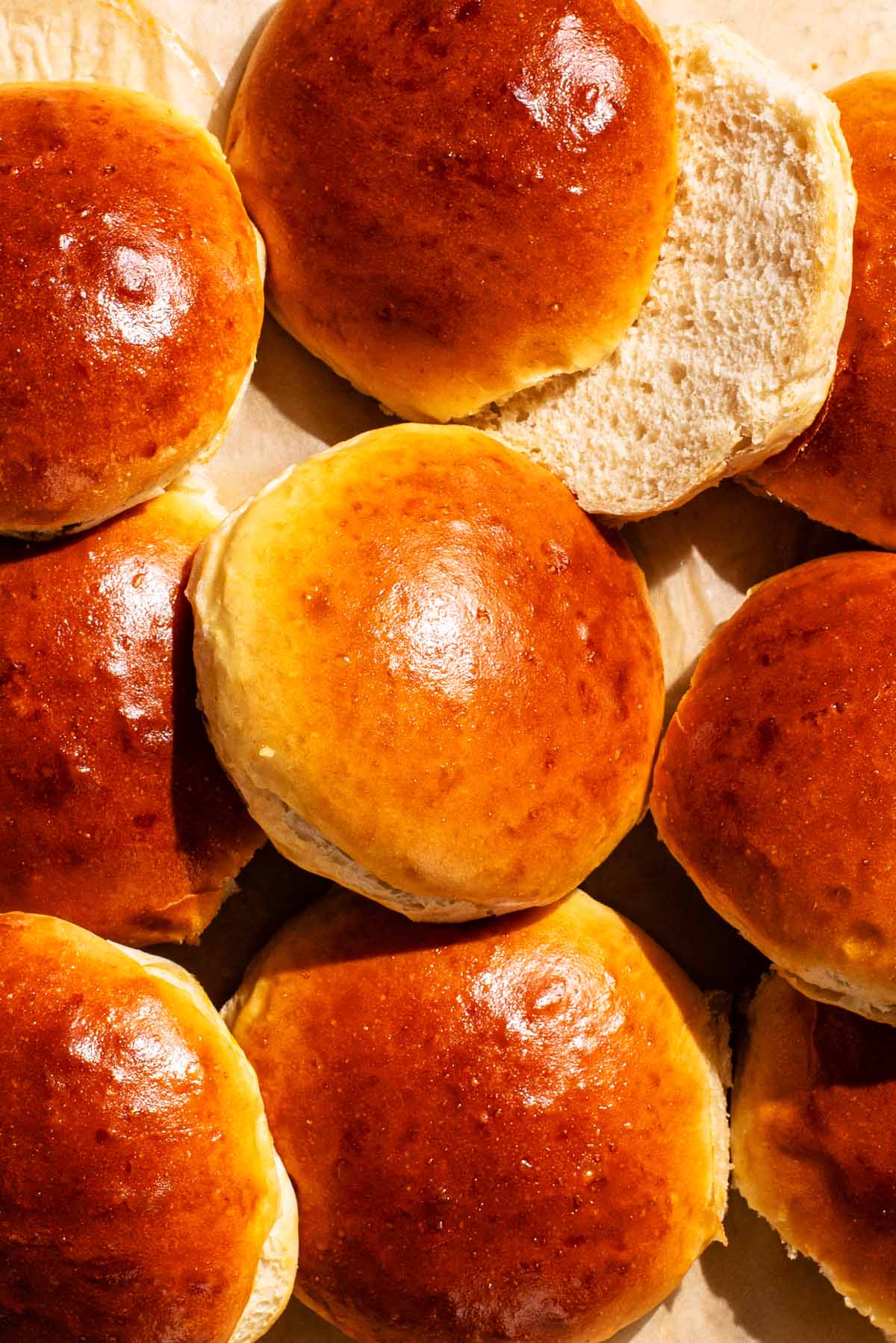
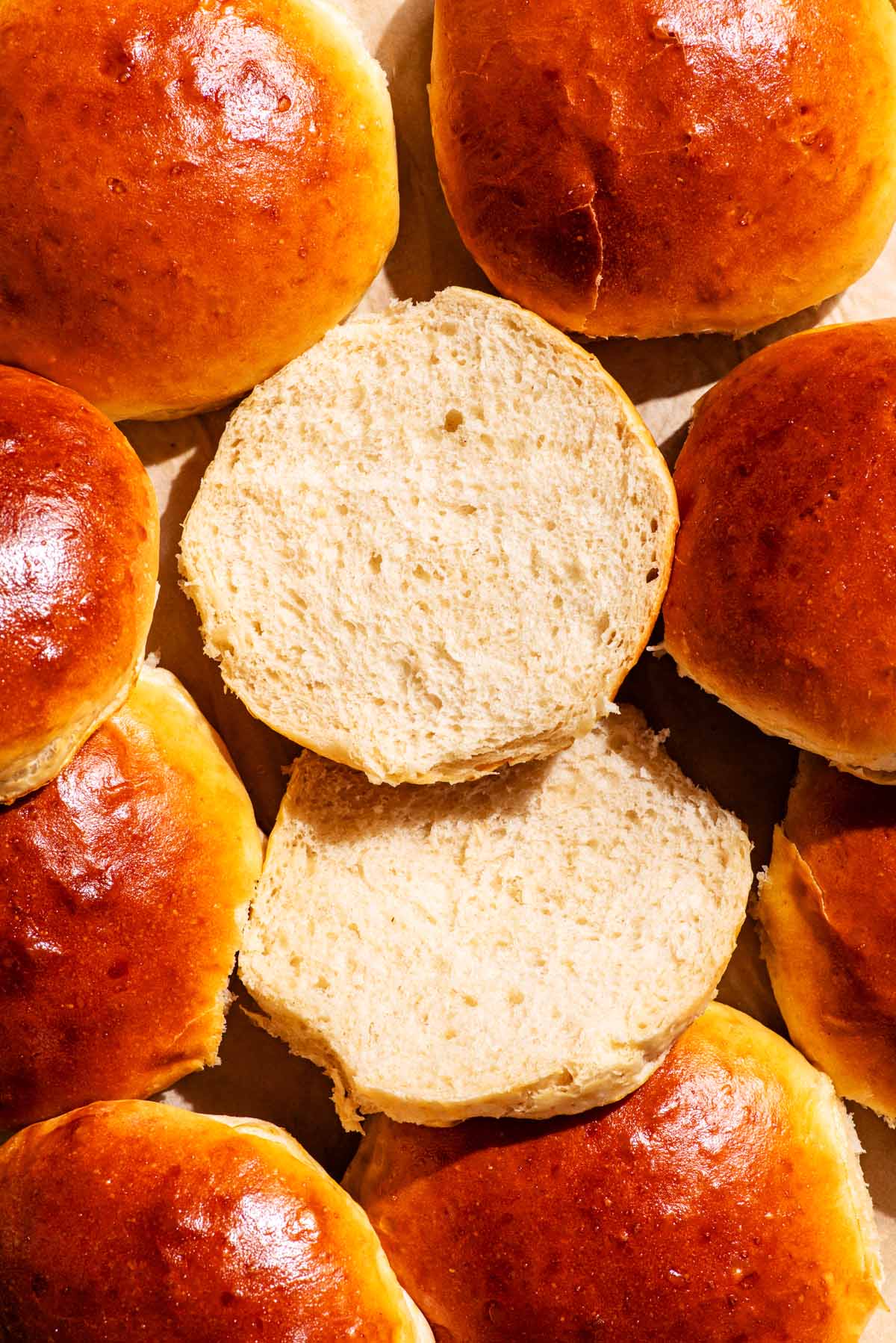
Made with both starter and yeast, these buttermilk sourdough discard hamburger buns are perfectly light and soft, just right for any type of burger. This makes a buttery, brioche-style bun.
This post may contain affiliate links. If you purchase through these links, we may earn a small commission, at no additional cost to you.
Recipe Rundown: Sourdough Discard Hamburger Buns
Prep Time
20 minutes
Bake Time
20 minutes
Rise Time
2.5 hours
Servings
9 buns
Difficulty
Intermediate
Calories
292 kcal*
Primary Ingredients
Sourdough discard, yeast, all-purpose flour, butter, sugar, milk, vinegar, and eggs.
*Calories are an estimation.
How This Recipe Works

As you'll see with most sourdough discard recipes, this is a recipe for brioche hamburger buns adapted for use with sourdough starter or discard. The discard isn't contributing much to the rise of the dough, as that's done mostly with yeast, but it does add flavour. This is a buttery, slightly sweet bun that's very traditional for hamburgers, with a glossy, delicate crust thanks to an egg wash. The interior texture is very light and the crust is so thin as to be almost nonexistent - exactly what you want for burgers.
My starter was recently tossed (not by me) so I've been relying more on discard recipes as I strengthen my new starter enough to bake buns and loaves without any added yeast. Adding discard to this recipe adds that delicious sourdough flavour but also means that I can bake these burger buns using my starter before it's ready for full sourdough burger buns again.
We eat a lot of bean burgers so let me tell you that it was no hardship to work on these buns! I developed and tested this recipe.

Ingredients You'll Need and Why
You'll need standard brioche ingredients - the buns are made with an enriched dough, including butter, eggs, and milk. That's what makes the bread so tender, light, and rich. These are our notes from recipe testing and you can find the full recipe card below with complete measurements and instructions.
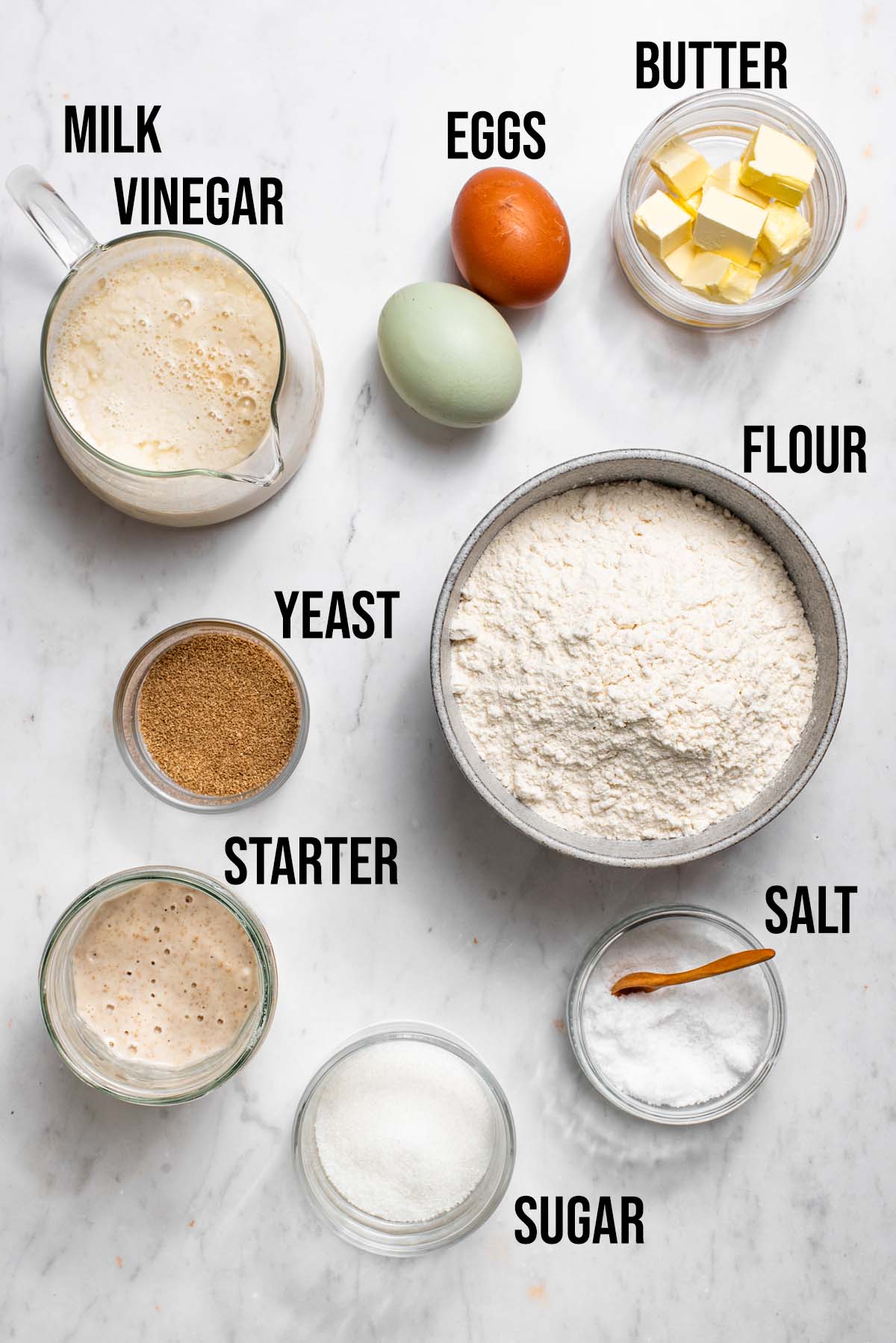
- Flour: we prefer all-purpose flour for burger buns rather than bread flour, which can make the texture a little too chewy. All-purpose keeps the buns soft and easier to bite into, exactly what's needed for a good hamburger bun.
- Milk: use full-fat dairy milk for the best result. Soy milk is the best non-dairy alternative.
- Vinegar: use apple cider vinegar or plain white vinegar. A splash of vinegar is added to the milk to make a quick homemade buttermilk alternative. We don't recommend subbing in store-bought buttermilk, which has a different consistency.
- Starter: since yeast does most of the work here, you can use sourdough starter that's not yet strong enough to bake a full loaf of sourdough bread, or discard from the fridge.
- Yeast: the recipe is written for instant yeast, which is mixed in with the flour and other dry ingredients. If you want to use traditional yeast instead, bloom it in the milk for 10 minutes before continuing with the recipe. Yeast should be stored in a sealed container in the fridge to keep it fresh.
- Sugar: a small amount of granulated sugar makes the buns softer and adds a hint of sweetness. Remember that sugar adds liquid in baking and reducing it will make the buns slightly dry.
- Eggs: large eggs are 57 grams in North America, and should be weighed if needed. Eggs add protein (structure) and fat (flavour) to the dough. One egg is for the dough and the other is for the egg wash.
- Butter: cubed and at room temperature. This recipe follows a traditional brioche method with the butter added to the mixed dough and slowly incorporated. We tested with melted butter and it made the dough too soft. If necessary, use a dairy-free butter alternative that comes in stick or block form, never from a tub.
- Salt: this should be fine sea salt. Added salt plays an important role in gluten development in bread baking, and shouldn't be reduced unless absolutely necessary. Reducing the salt will also make the buns taste bland.
Use the JUMP TO RECIPE button at the top, or scroll to the bottom of the post to see the printable recipe card with full ingredient measurements and complete instructions.
How to Make Discard Burger Buns
It's easiest to make the buns in a stand mixer or with the kneading attachment on a strong hand mixer. If you knead by hand have a dough scraper on hand for the first few minutes, as the dough is soft and sticky at first. Don't be tempted to add extra flour if kneading by hand. Just keep going until the dough comes together.
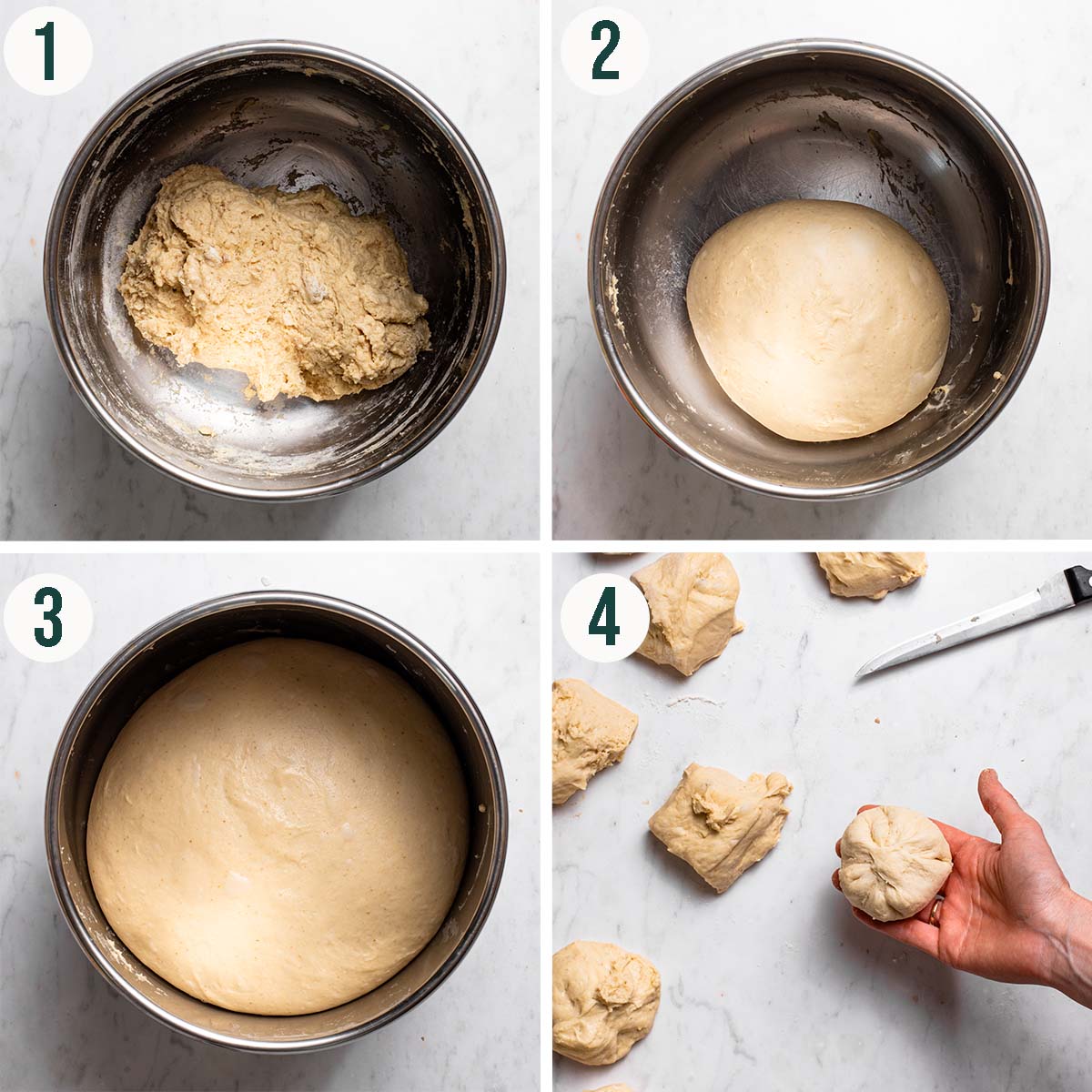
Step 1: mix the egg and buttermilk in the bowl of your stand mixer, then mix in the starter. I always whisk by hand for this step rather than using the attachment for my mixer. Add the flour, sugar, yeast, and salt, and mix to combine. The dough will be shaggy and slightly dry.
Step 2: knead the dough, adding the butter piece by piece and allowing it to incorporate before adding the next. Knead for about 10 minutes in total. The dough should be soft, smooth, and elastic when finished. It will be very slightly tacky.
Step 3: cover tightly and set aside to right at room temperature until doubled in size. We like to cover with a tea towel and a large plate to keep the moisture in. If you know your home is very dry, use a damp tea towel and lightly oil the top of the dough.
Related: Sourdough Discard Dinner Rolls
Step 4: divide the dough into 9 equal pieces and pre-shape. You can see Alex showing how to shape buns in this video (the link is timestamped).
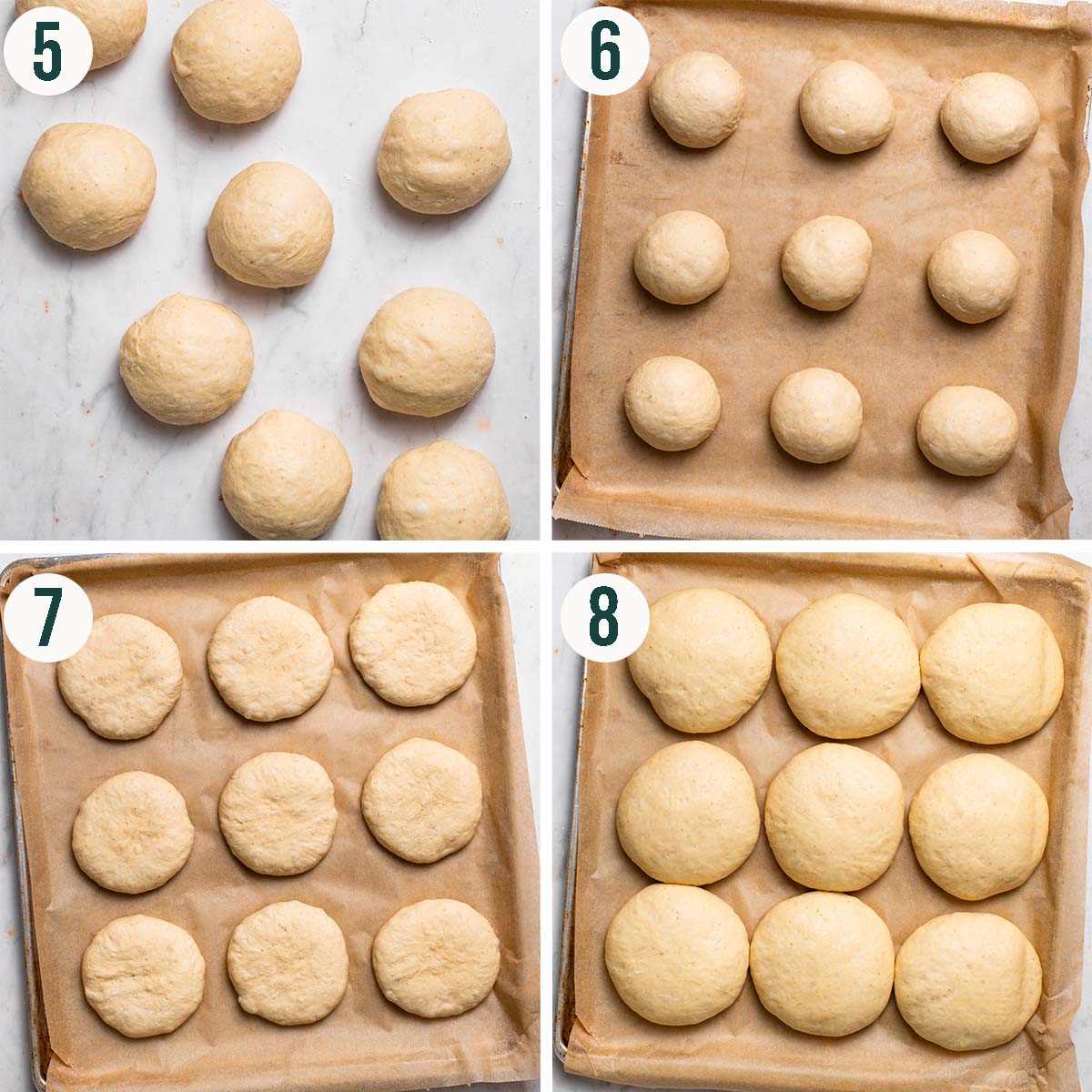
Step 5: finish shaping the buns into rounds, using a cupped hand and rotating each ball to create smooth, taut balls of dough.
Step 6: place the buns seam-side down onto a lined baking sheet. Use the largest baking sheet you have to prevent too much touching when the buns bake.
Step 7: use your hand to press the buns, flattening each to be about 2.5cm (1 inch) high. The dough will want to spring back into shape. Press once, let the buns rest for 5 minutes, then press again. The dough shouldn't be sticking to your hands.
Step 8: cover and let the buns rise until puffy and almost doubled in size. I usually use a second, deep baking sheet inverted over the buns to cover while rising. The steam method in the oven works well but you have to keep a close eye on the buns if you do that to avoid over-proving.
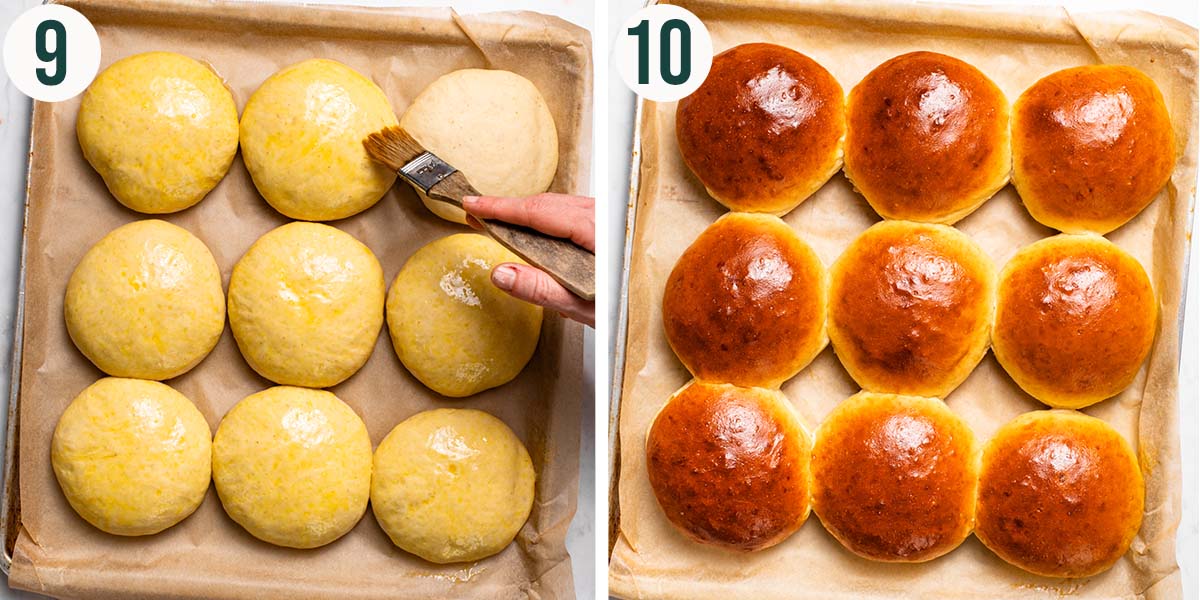
Step 9: brush the risen buns with the egg wash. At this point, optionally sprinkle the tops of the buns with sesame seeds or poppy seeds. Adding a pinch of salt to the egg before whisking for an egg wash helps the egg break down slightly so that it's easier to brush evenly onto the dough.
Step 10: bake until golden, about 20 minutes. If you have a thermometer check the temperature of the buns to see if they're baked through. They should be 190°F (~90°C) when finished baking.
Expert Tips for the Best Buns
- Weigh the ingredients: we generally only provide weights for our sourdough and discard recipes, especially for bread and buns, for accuracy. It's much easier to have a reliable, foolproof result when you weigh the ingredients instead of using less accurate volume measurements.
- Use room temperature ingredients: the egg and butter should be at room temperature before starting. To quickly bring eggs up to room temperature from the fridge, submerge in a bowl of warm water for 10 minutes before use.
- Don't skip the egg wash: this is what makes the buns so golden and shiny, adds a little extra flavour, and helps create the very thin, delicate crust.
- Flatten those buns: this is an important step and shouldn't be skipped. Flattening the buns with your hands makes them the right shape and size for burgers. Otherwise they will be tall and round like dinner rolls.
- Look for rise, not at the clock: timing is an estimate because your kitchen temperature will vary and home bakers generally don't have proving drawers or tents. Look at the dough and see if it's doubled after the first rise and do the fingertip test before baking.
More Sourdough Discard Recipes
Sourdough Discard Hamburger Buns
Equipment
- Stand mixer
- Large baking sheet
Ingredients
- 225 grams milk
- 15 grams apple cider vinegar, or white vinegar
- 1 large egg, room temperature
- 100 grams sourdough discard, or active starter
- 450 grams all-purpose flour
- 40 grams granulated sugar
- 9 grams instant yeast
- 8 grams fine sea salt
- 60 grams butter, cubed, room temperature
Egg Wash
- 1 large egg
- Pinch salt
- Sesame or poppy seeds, for topping, optional
Instructions
- Mix the milk and vinegar together in a small saucepan. This is your homemade buttermilk. Heat over low until just warm to the touch. If it gets too hot, set it aside to cool before use. If the milk is too hot it will make the dough far too soft and can kill the yeast.225 grams milk, 15 grams apple cider vinegar
- Whisk the egg, sourdough discard, and warm buttermilk in the bowl of your stand mixer to combine.1 large egg, 100 grams sourdough discard
- Add the flour, sugar, yeast, and salt. Use the kneading attachment to mix for 2 to 3 minutes minutes at medium speed, until a shaggy dough forms.450 grams all-purpose flour, 40 grams granulated sugar, 9 grams instant yeast, 8 grams fine sea salt
- Reduce to low speed and add the butter piece by piece, waiting for each piece for incorporate before adding the next. Once all of the butter has been incorporated, increase the speed to medium again and knead for another 5 minutes, until the dough is smooth, elastic, and slightly tacky. This should amount to 10 to 12 minutes total kneading time.60 grams butter
- Cover tightly and rise at room temperature until doubled in size, about 1 ½ hours.
- Line a large baking sheet with parchment paper and set aside.
- Once the dough has doubled in size, transfer it to a lightly floured surface and divide into 9 equal pieces.
- Pre-shape each piece into a rough ball, then flip the ball seam-side down on a clean, flour-free work surface and use a cupped hand (with your fingers forming a cage) to rotate the dough into a smooth, taut bun. Repeat for all of the buns and place onto the prepared baking sheet.
- Press down with your hand to flatten each bun to 2.5cm (1 inch) high. Press all of the buns, wait 5 minutes, then repeat. This allows the gluten to relax and will ensure that the buns do flatten effectively.
- Cover well and rise again until the buns are very puffy, about 45 minutes. Once the buns are fully proved, a small indentation should remain when pressed with a floured fingertip.
- Near the end of the second rise, preheat the oven to 375°F (190°C).
- To make the egg wash, beat the egg with the pinch of salt. Brush the tops of the buns lightly with egg wash, being careful not to deflate the dough. Optionally top with seeds.1 large egg, Pinch salt, Sesame or poppy seeds
- Bake for 15 to 20 minutes, or until the internal temperature of the buns reaches 190°F (90°C). The buns will be very golden and shiny once baked.
- Cool fully before slicing and serving. We usually cool the buns on a wire rack, loosely covered with a cotton or linen tea towel to keep them soft as they cool.
Notes
Nutrition
Nutrition information is an estimate and is provided as a courtesy. For precise nutritional data, please calculate it independently using your preferred nutrition calculator.
This post may contain affiliate links. If you purchase through these links, we may earn a small commission, at no additional cost to you.
 Did you make this recipe?Please consider leaving us a rating and a comment. It helps others find our work, which genuinely supports what we do. Thank you!