
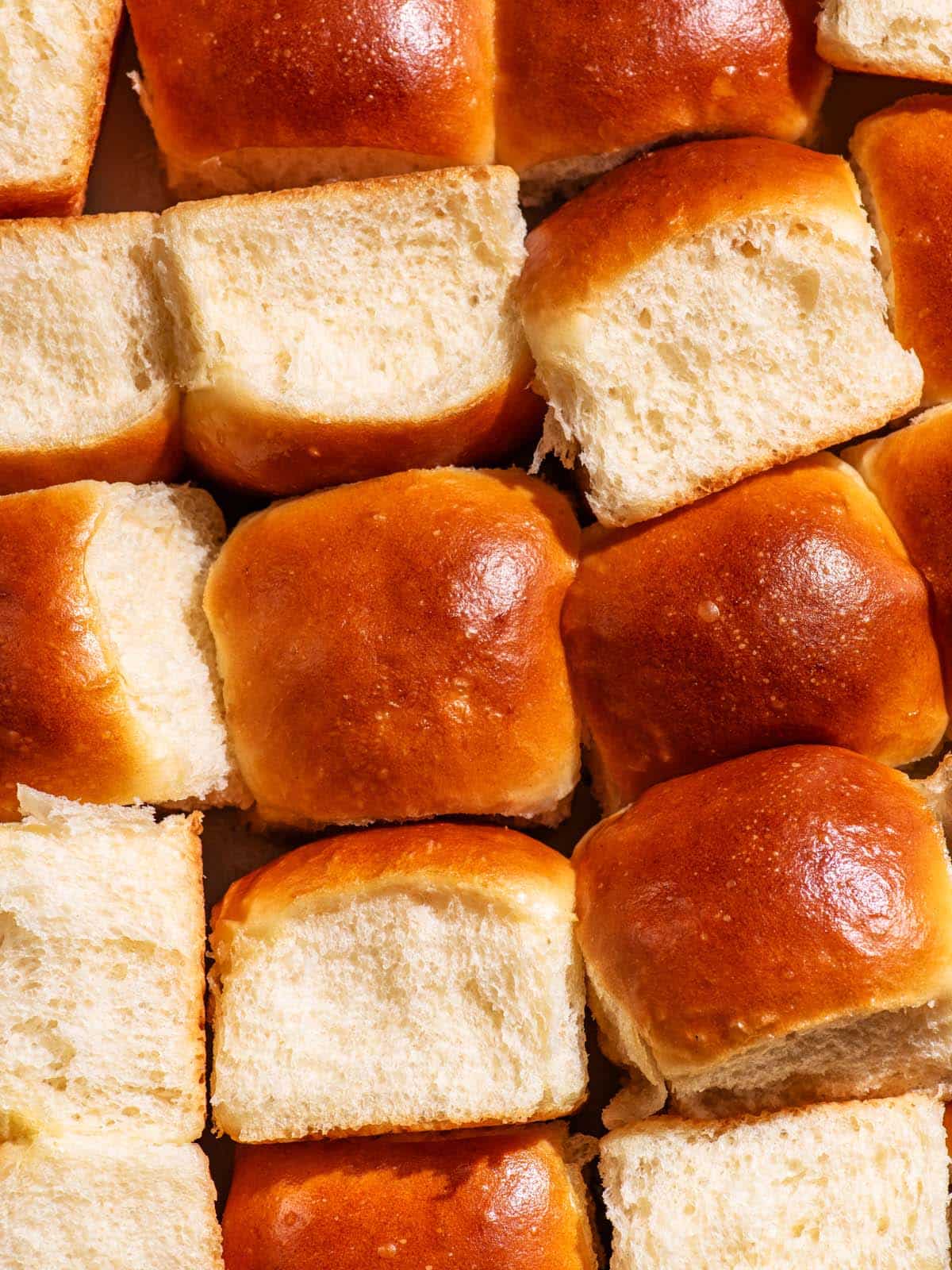
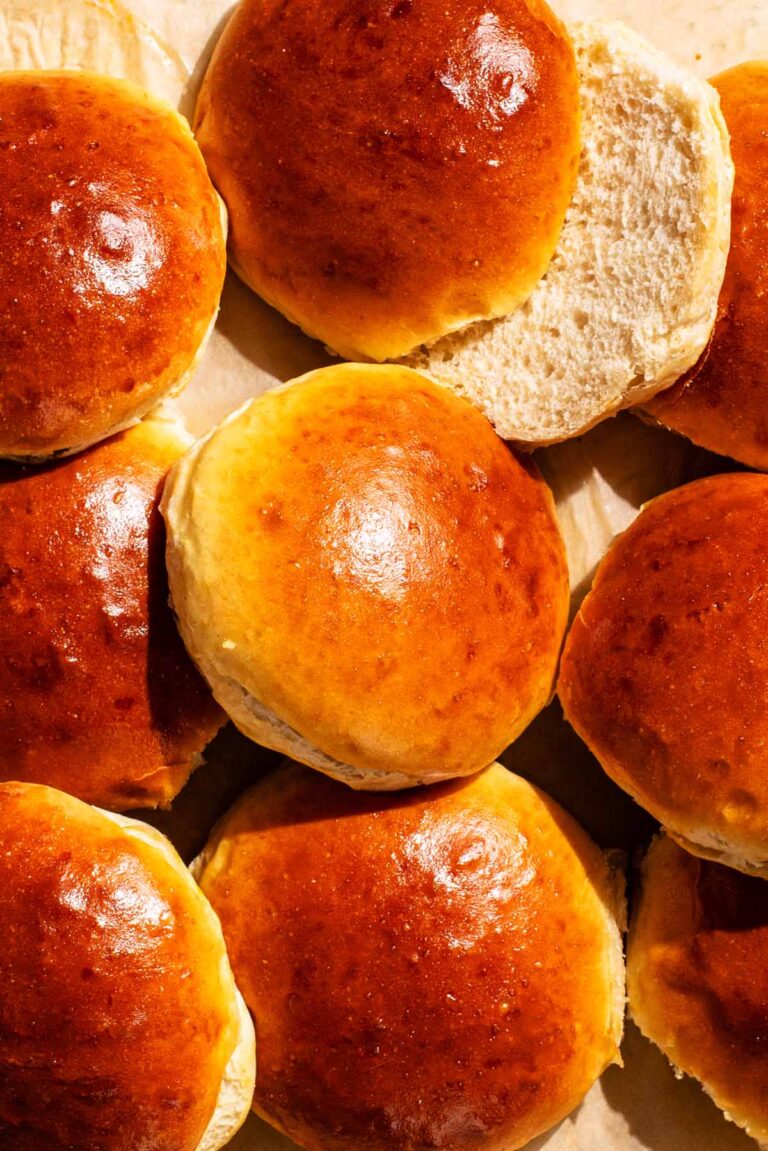
Extraordinarily light and fluffy, these are old-school sourdough discard dinner rolls, like your grandmother's but with extra flavour and tenderness. You won't believe just how soft these rolls are. Please note that these need about 4 hours of rising time.
This post may contain affiliate links. If you purchase through these links, we may earn a small commission, at no additional cost to you.
Recipe Rundown: Sourdough Discard Dinner Rolls
Prep Time
30 minutes
Bake Time
10 minutes
Rise Time
4.5 hours
Servings
20 rolls
Difficulty
Intermediate
Calories
95 kcal*
Primary Ingredients
Sourdough discard, yeast, all-purpose flour, butter, milk, and an egg.
*Calories are an estimation.
How This Recipe Works

There's nothing better than a soft dinner roll, and this is a particularly good version. Sourdough discard boosts the flavour and improves the texture a bit here. A longer than typical rising time makes a big difference for truly excellent discard dinner rolls.
As always, this isn't just a roll recipe with discard added. We test all of our sourdough recipes as distinct, individual recipes, because if you do try to just add discard without testing you're likely to be disappointed. Not only does it add more volume, but it also plays a role in the acidity of the dough, how yeast is going to behave, and more. If you want a recipe without any yeast, try our sourdough dinner rolls instead.
This recipe is a direct adaptation of my grandmother-in-law's dinner rolls that she made for at least fifty years, probably longer. They needed some testing, of course, to include discard and adapt for a modern audience - I needed to nail down exact timings, amounts, the size of the baking container, and so on - but the base recipe is hers. I also reduced the amount by 75% because she was a farmer and baked on a large scale!

Ingredients You'll Need and Why
The ingredients needed are simply ones, what you probably already have in the house. It's important that the egg and butter are both at room temperature. These are our notes from recipe testing and you can find the full recipe card below with complete measurements and instructions.
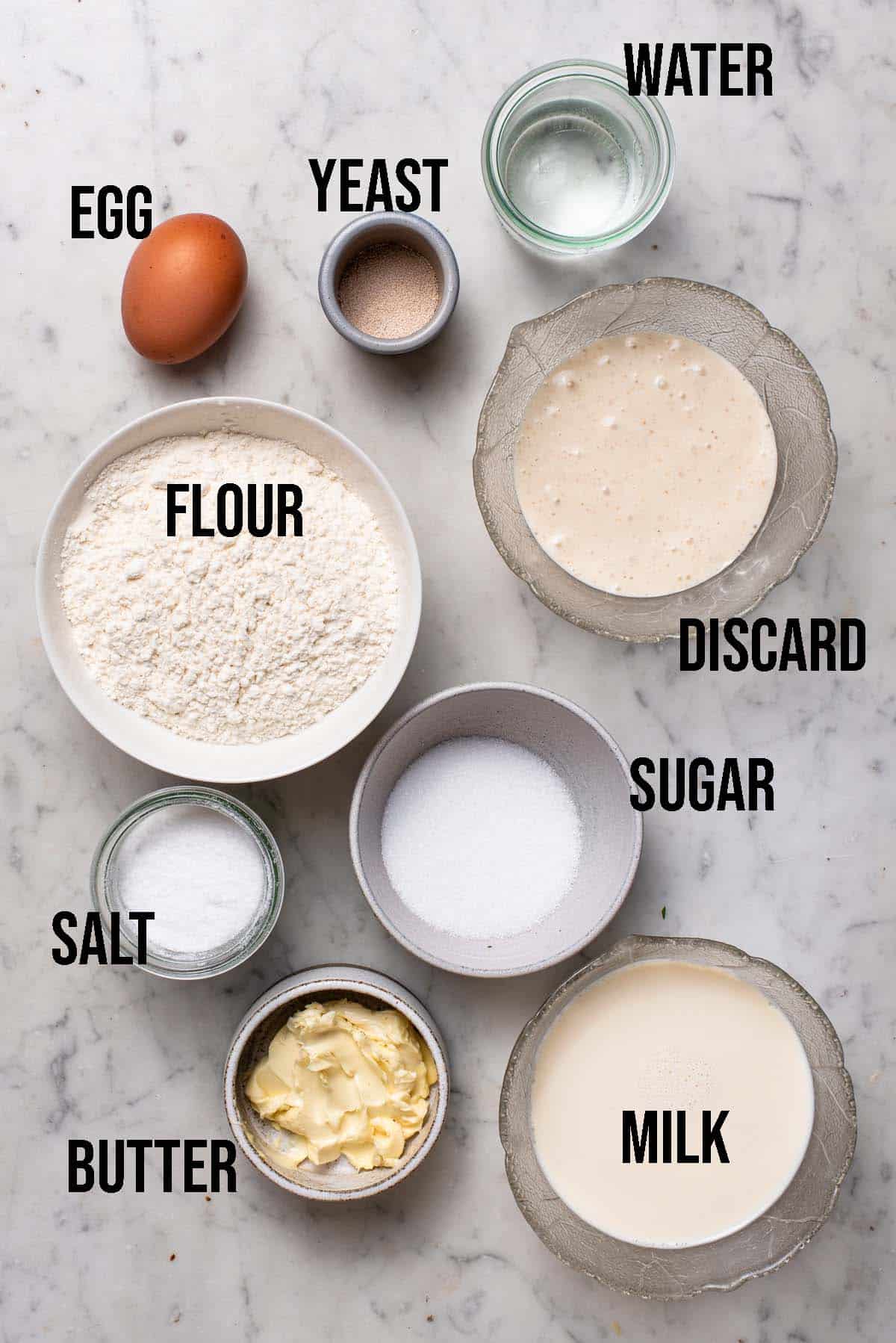
- Flour: use all-purpose white flour. We haven't tested with bread flour, but the rolls are meant to be more tender than chewy, so we recommend sticking with plain white flour. You can use up to 40% whole wheat flour but note that the buns won't be as soft.
- Sourdough discard: this should be relatively fresh discard to avoid an unpleasantly sour taste. You can use active starter too but be sure to weigh in that case.
- Milk: use whole milk, 2% in a pinch, or soy milk if you need a dairy-free option. The milk is warmed before adding so it can be right out of the fridge.
- Butter: use salted butter, at room temperature. Margarine is a good substitution.
- Egg: adding an egg to the dough improves the structure by adding protein and makes the rolls a little richer.
- Sugar: if you reduce the sugar, the rolls will taste flat and won't brown when baked. It's a small amount but makes a big difference.
- Yeast: yes, it's a small amount, and that's because this is a slow-rise recipe. This should be active dry yeast or traditional, not instant. Fresh yeast works well if you have it (5 grams).
- Salt: don't change the salt amount, and stick to fine-grain salt. It has an important role in gluten development and shouldn't be adjusted in bread recipes. Reducing salt will also make for pale, anemic-looking rolls.
Use the JUMP TO RECIPE button at the top, or scroll to the bottom of the post to see the printable recipe card with full ingredient measurements and complete instructions.
How to Make Discard Dinner Rolls
These are easiest to make with some kind of machine to knead, like a standing mixer or a hand mixer with the dough attachment. If you knead by hand have a dough scraper on hand for the first few minutes, as the dough is soft and sticky at first. Don't add extra flour if kneading by hand!
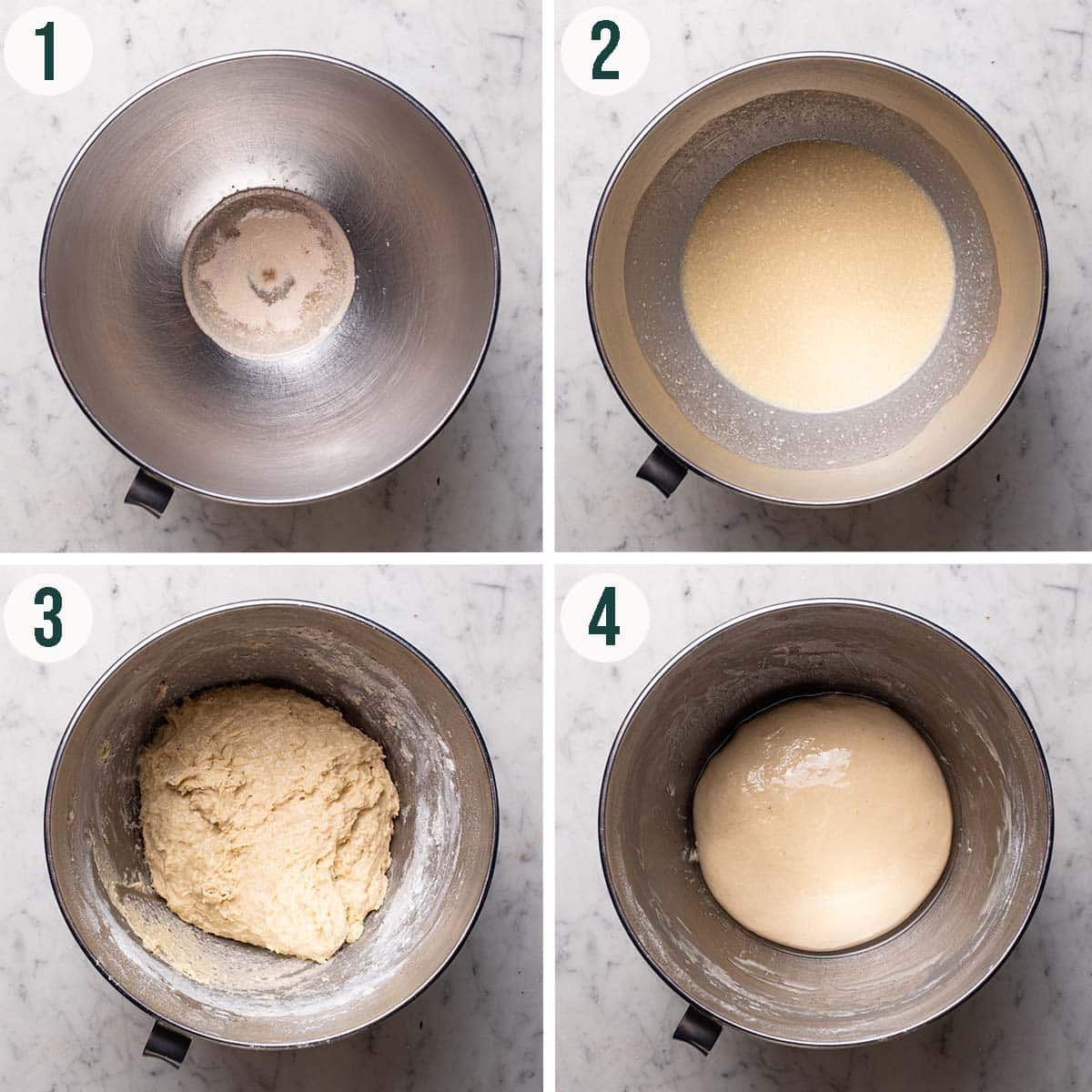
Step 1: bloom the yeast in warm water with a little sugar. This serves two purposes, both to activate the yeast, but also for you to know whether your yeast is still good or not before continuing with the recipe. If it doesn't bubble up, you need new yeast.
Step 2: whisk in the milk, discard, egg, sugar, and butter. The butter will probably be in small pieces, that's normal.
Step 3: stir in the flour and salt. It will form a shaggy dough that might seem too wet if you've never made dinner rolls before. It'll come together when kneaded - that's what makes the buns so light and airy.
Related: Sourdough Discard Sandwich Bread
Step 4: knead until the dough passes the windowpane test, then lightly oil the dough and set aside to rise, covered. The dough must rise in a warm place. If it's very cold in your home, place it in a slightly warmed oven (with the light on) or else it'll take far too long to rise.
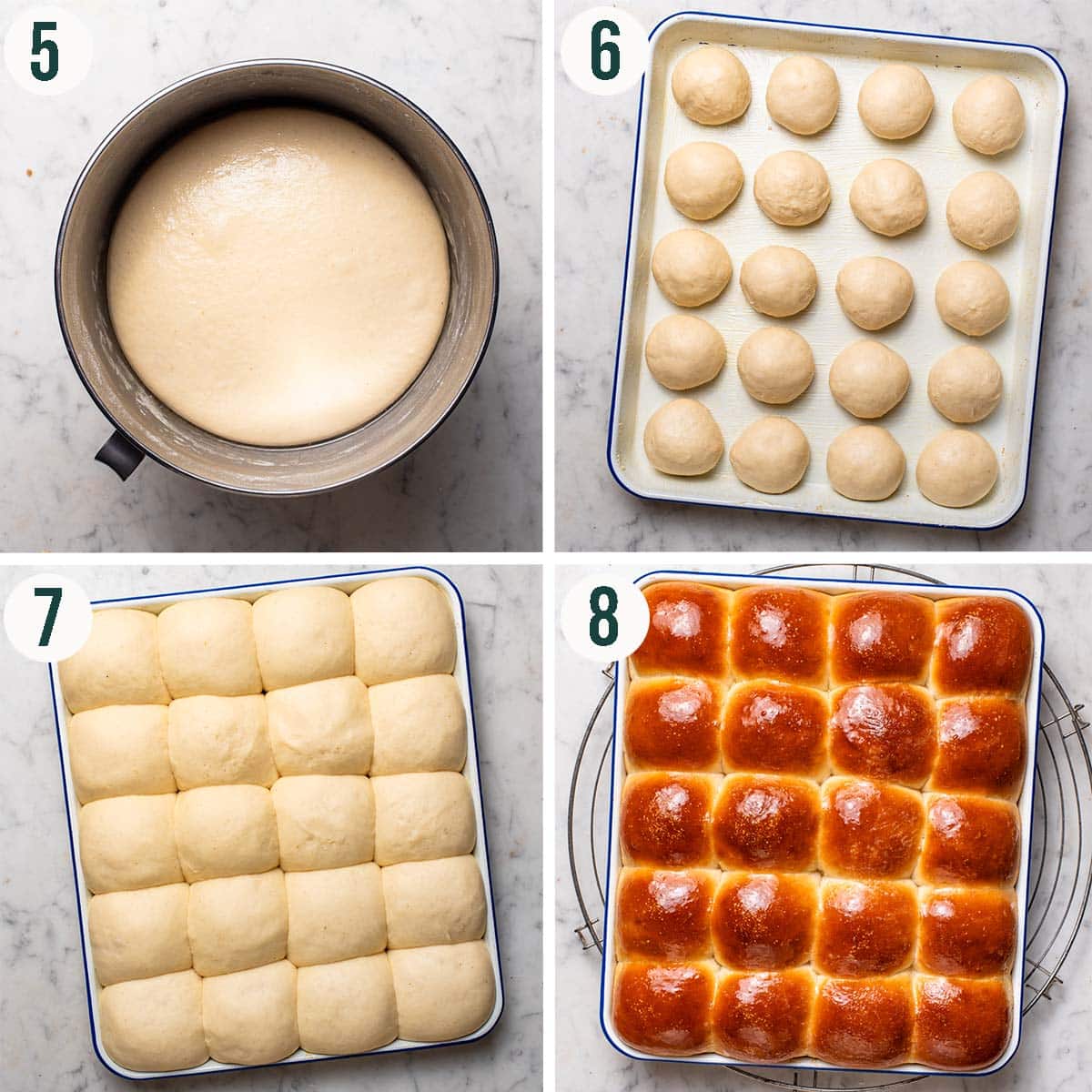
Step 5: rise for about 2 hours at room temperature. The visual will be more important than the time here, and what you're looking for is dough that's doubled in size. If your home is cold, it'll take longer. If it's very warm, it probably won't need the full 2 hours. Never set dough in a hot place, like on a radiator, to rise.
Step 6: divide the dough into small balls and place in a greased baking sheet. You can use a 9x13 casserole dish and it'll work, but the bun shape will be slightly different and your baking times will change.
Step 7: let the buns rise until the sheet is crowded and they've increased in size by about 2.5 times. You can do a poke test here to check proving but if you don't let them rise for long enough (about 2 hours again) they won't be as light as the buns pictured.
Step 8: bake until golden, just 10 minutes. The buns are small and the oven temperature is fairly hot, so they don't need long to bake. Brush with more butter as soon as they come out of the oven.
Expert Tips for the Best Buns
- Give yourself enough time: there's no point in trying to rush this recipe, and the dough does need more time to rise than other dinner roll recipes. That's how the original recipe was written and it has a big impact on the rolls, making them much more flavourful and tender than quicker versions.
- Weigh the ingredients: while we do offer recipes with cup measurements, it's really best to weigh your ingredients to ensure good results. This is especially important if you're not yet experienced enough to bake bread by feel.
- Don't stress about the size before rising: the rolls will seem very small before rising. The recipe card from my grandmother-in-law says to 'set wide apart as they rise a great deal' and they do!
- Quickly bring ingredients up to room temperature: if your eggs are cold, place the egg needed into a bowl of warm (not hot) water for 10 minutes before starting. The butter can be heated in the microwave in short bursts until softened.
- Grease the dough: since the dough needs a long time to rise, it helps to lightly oil the surface to prevent it drying out as it rests.
- Brush with butter: to make the buns even softer and give them another flavour boost, brush the tops with butter as soon as they come out of the oven. That's what gives them their glossy look and they taste so much better.
More Sourdough Discard Recipes

If you make this Sourdough Discard Rolls recipe or any other sourdough recipes on the Baked Collective, please take a moment to rate the recipe and leave a comment below. It’s such a help to others who want to try the recipe. For more baking, follow along on Instagram, TikTok, and YouTube.
Sourdough Discard Dinner Rolls
Equipment
- Measuring cups and spoons or a digital kitchen scale we recommend weighing ingredients for this recipe
- Hand or stand mixer with dough attachment
- Wire rack
- baking sheet 12x10 inch (30x25.5 cm) pictured and is the ideal size
Ingredients
- 2 tablespoons warm water, just warm to the touch, not hot
- ½ teaspoon granulated sugar
- ½ teaspoon traditional or active yeast, not instant
- 180 ml whole milk, heated until just warm to the touch
- 100 grams sourdough discard, room temperature
- 1 large egg, room temperature
- 2 tablespoons granulated sugar
- 2 tablespoons salted butter, room temperature
- 400 grams all-purpose flour
- 1 teaspoon fine salt
Instructions
- Add the water and ½ teaspoon sugar to a large bowl or the bowl of your stand mixer. Sprinkle the yeast over the water and set aside to bloom for 10 minutes. The yeast should be bubbly and active.2 tablespoons warm water, ½ teaspoon granulated sugar, ½ teaspoon traditional or active yeast
- Add the warm milk, discard, egg, sugar, and butter to the bowl and whisk to combine. The butter will be in small pieces, that's normal.180 ml whole milk, 100 grams sourdough discard, 1 large egg, 2 tablespoons granulated sugar, 2 tablespoons salted butter
- Add the flour and salt, then stir to form a shaggy dough.400 grams all-purpose flour, 1 teaspoon fine salt
- Knead for 12 to 15 minutes with the dough attachment, or 15 minutes by hand using a dough scraper as needed. The dough will be sticky at first but will come together into a smooth, soft ball when it's properly kneaded. It should pass the windowpane test when ready.
- Form the kneaded dough into a ball and rub a small amount of oil over the top to prevent it drying out. Cover with a tea towel and large plate. Set aside to rise in a warm draft-free place for about 2 hours, or until doubled in size.
- Once the dough has risen, grease the baking sheet generously with butter and set aside.
- Divide the dough into 20 equal pieces (about 40 grams per bun) and shape into round buns. Place onto the prepared baking sheet, leaving an inch (2.5 cm) between each bun to allow for rising.
- This is important: the dough will stick to a tea towel. We recommend one of two methods for the second rise. Either place the buns with the baking sheet into a large plastic bag and tie it off with enough air that the plastic doesn't touch the buns, or do a steam method. For the steam method you'll need to place the baking sheet in the oven on the centre rack, turn on the light, and then place a tray of freshly boiled water on the bottom of the oven. If rising at room temperature, the buns will need 2 to 2.5 hours to rise. With the steam method they'll need about 1.5 hours (don't refresh the water, but don't open the oven door).
- Let the buns rise until slightly more than doubled in size. Close to the end of the rising time, preheat the oven to 400°F (200°C). (If you did the steam method, don't forget to remove the buns and the tray of water beforehand!)
- Bake the buns on the centre rack of the preheated oven for 10 minutes, or until the interior temperature is 93°F. The buns will rise and brown significantly.
- Take the buns out of the oven and immediately brush the tops with more butter. Cool for at least 10 minutes before serving.
Notes
Nutrition
Nutrition information is an estimate and is provided as a courtesy. For precise nutritional data, please calculate it independently using your preferred nutrition calculator.
This post may contain affiliate links. If you purchase through these links, we may earn a small commission, at no additional cost to you.
 Did you make this recipe?Please consider leaving us a rating and a comment. It helps others find our work, which genuinely supports what we do. Thank you!