
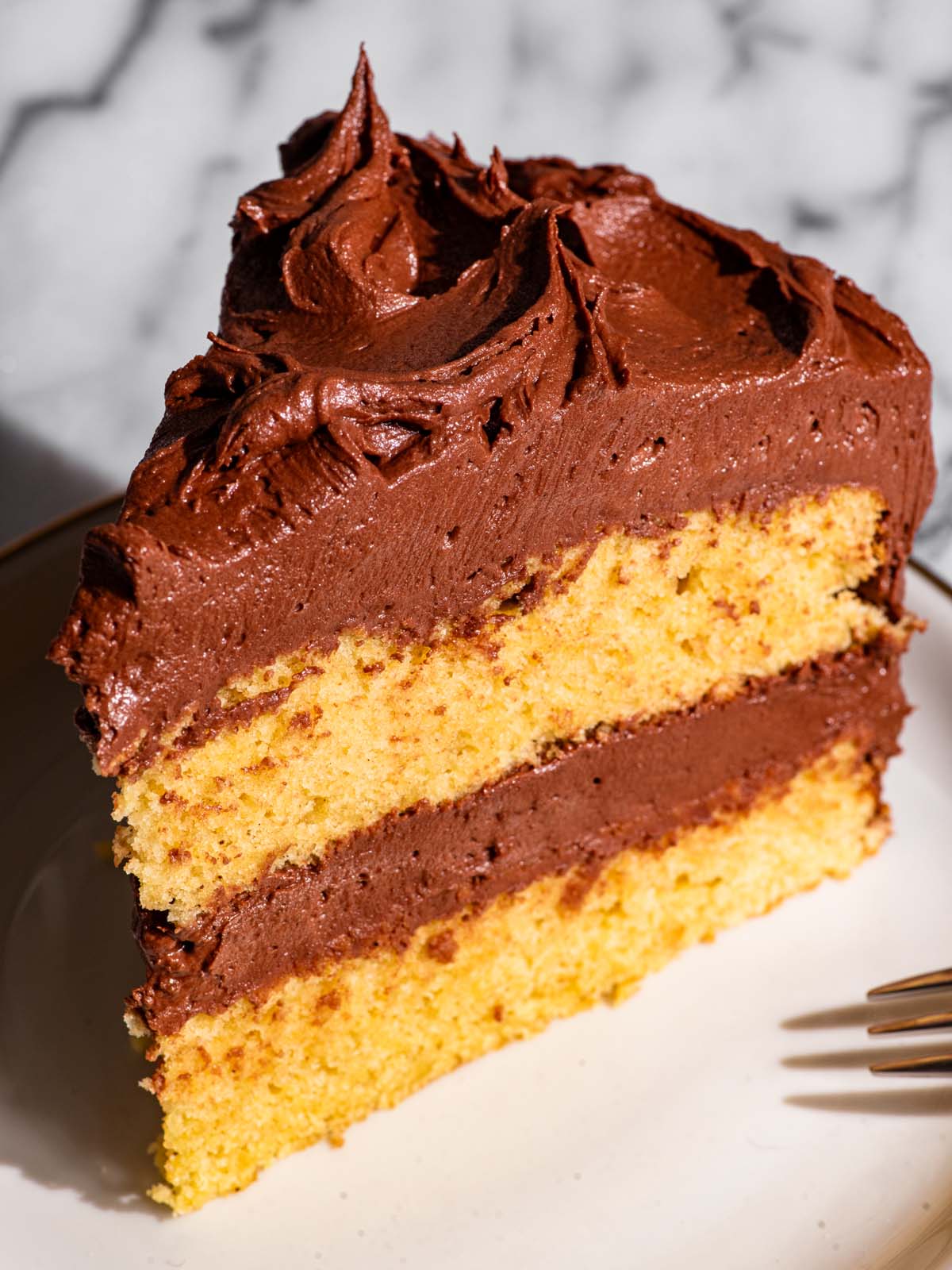
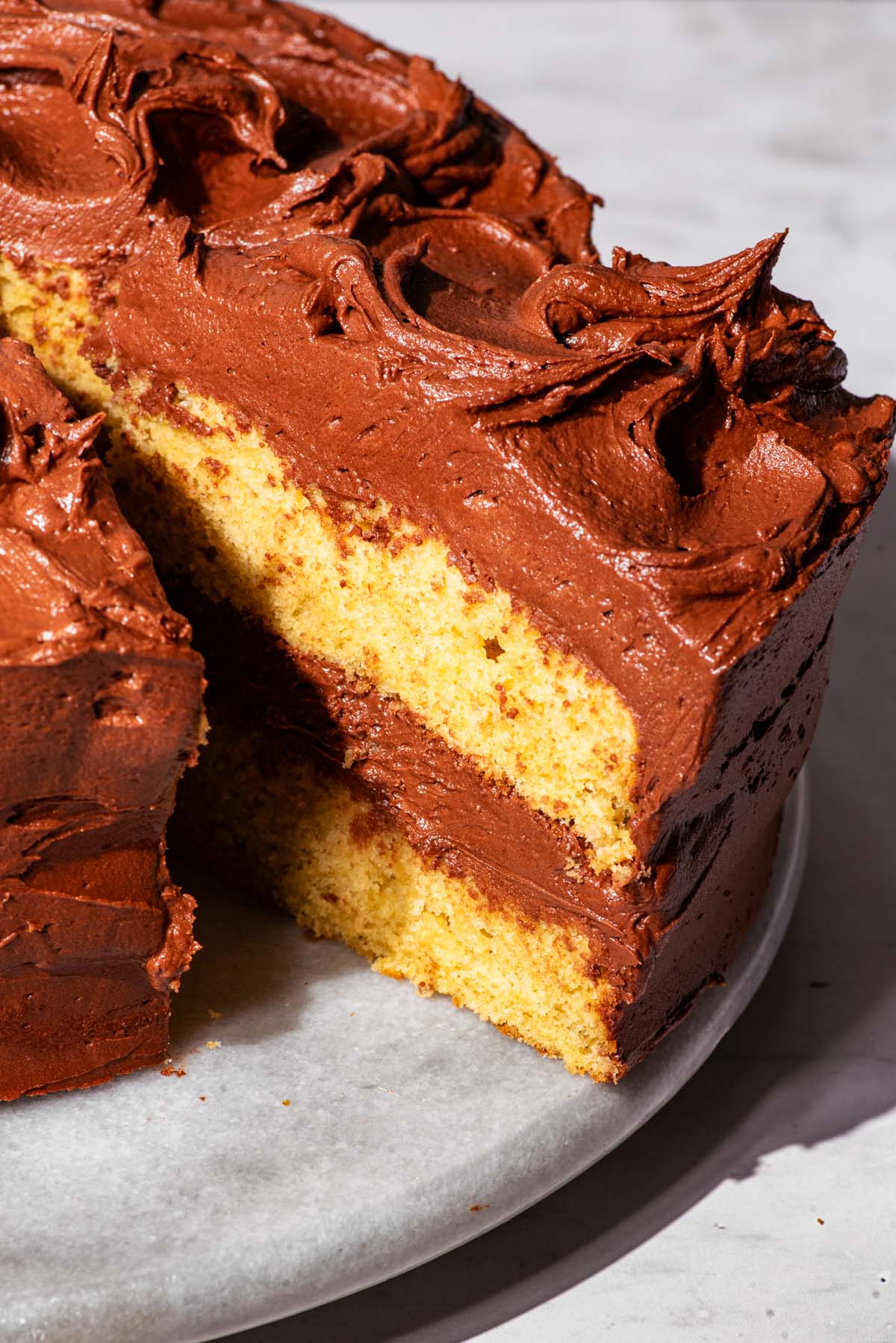
A true layer cake, this sourdough vanilla cake is the perfect yellow cake with the addition of sourdough discard. Add any frosting you like for a spectacular dessert. Try it with our chocolate buttercream frosting as pictured for a real birthday cake.
This post may contain affiliate links. If you purchase through these links, we may earn a small commission, at no additional cost to you.
Recipe Rundown: Sourdough Vanilla Cake
Prep Time
30 minutes
Bake Time
22 minutes
Total Time
52 minutes
Servings
12 people
Difficulty
Intermediate
Calories
355 kcal*
Primary Ingredients
Sourdough discard, cake flour, butter, sugar, eggs, vanilla, and milk.
*Calories are an estimation.
How This Recipe Works

This is a really traditional, birthday-cake kind of recipe, but it's a sourdough cake. Discard or starter is added to vanilla cake batter to include it without overwhelming the cake and making it taste sour or like bread. You'll see a similar method used in our sourdough chocolate cake even though they're two completely different cakes.
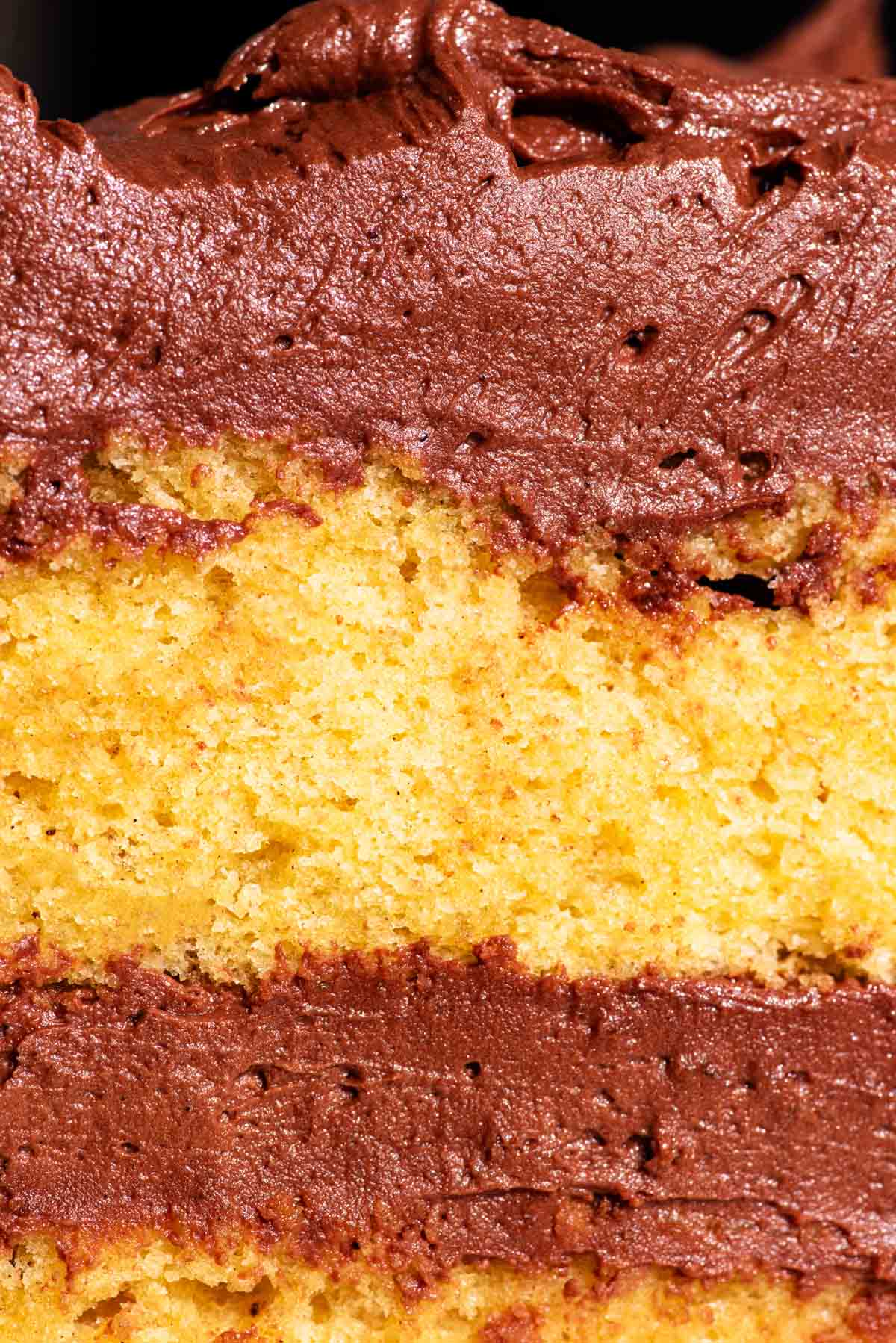
You'll need a lot of eggs for this recipe, plus both butter and oil, homemade buttermilk, and vanilla. It uses a meringue method for an extremely light, airy cake that's still sturdy enough to stand up well to layering. If you want to make a yellow cake but would like to include your starter in the mix, this is the perfect sourdough cake recipe for you.
This cake uses a chiffon cake method and the butter, sugar, and eggs aren't creamed together. I developed and tested this recipe, adapted from The Perfect Cake. My taste-testers were thrilled with it in general. It's a real dream of a cake, a true birthday cake.

Ingredients You'll Need and Why
This is for the two cake layers, not including any frosting ingredients, so you can choose which you'd like. We've outlined a few suggestions below depending on the type of cake you want to serve. These are our notes from recipe testing and you can find the full recipe card below with complete measurements and instructions.
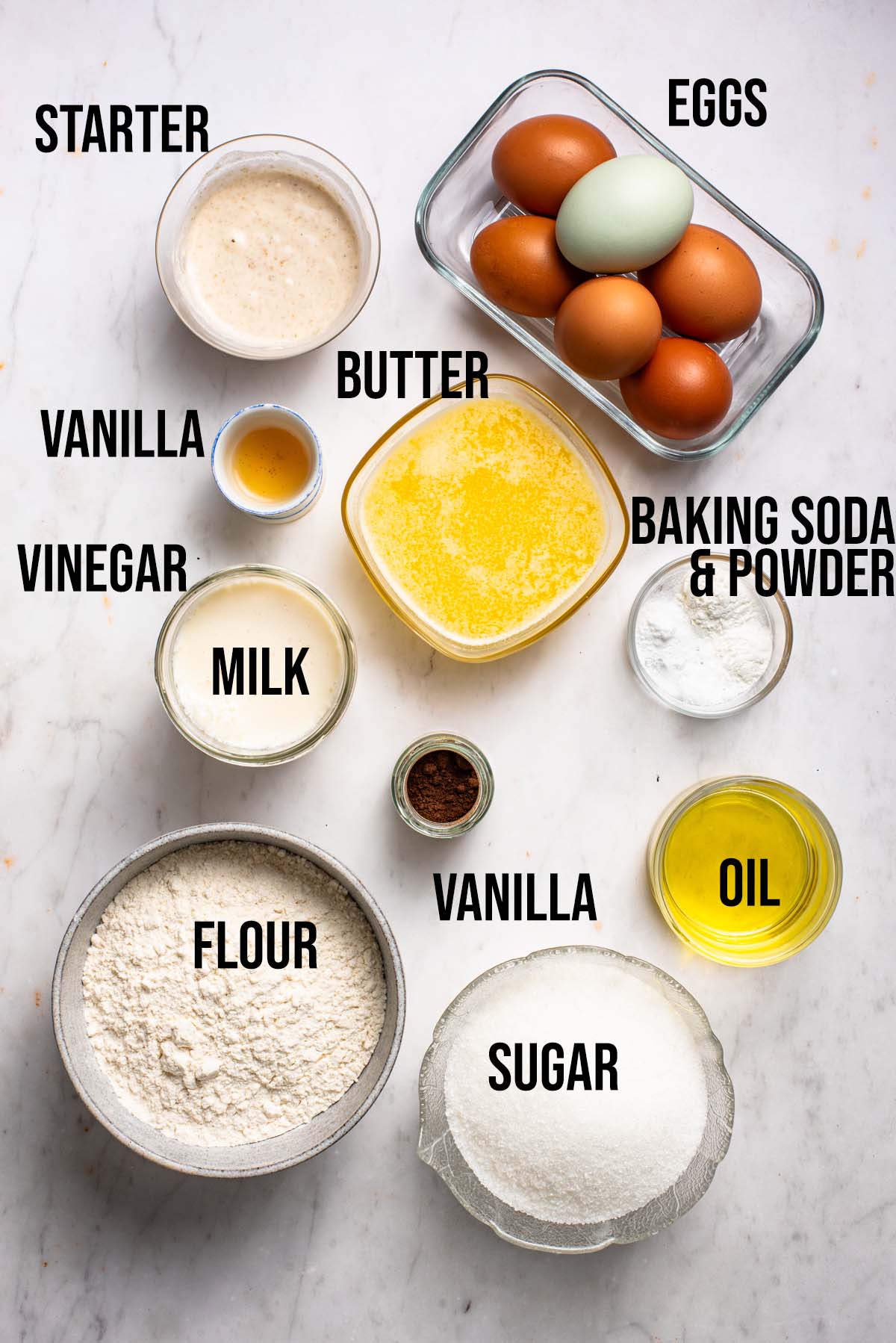
- Flour: use cake flour, also called pastry flour, if you can get it. The eggs provide enough structure and cake flour makes for a light, delicate crumb.
- Sugar: for the best result, use granulated white sugar. Raw sugar granules are too large and don't incorporate as well into the mixture, making for a pitted appearance and less even cake.
- Eggs: you'll need 6 large eggs. One whole large egg, weighed without the shell, should be about 50 grams. If your eggs aren't standard sizes, you can weigh them, but don't get too hung up on this. This recipe will leave you with an extra three egg whites, which can be used in meringues or a white cake.
- Oil: this should be a light-tasting oil, like avocado or vegetable oil. Use your preferred baking oil that's liquid at room temperature (not coconut oil).
- Butter: use salted butter if possible. If you only have unsalted then add a pinch of salt to the batter.
- Vanilla: ideally use two types of vanilla, either powder or paste plus extract. If you don't have access to vanilla powder or paste, use a full tablespoon of vanilla extract instead. This is outlined in the recipe card.
- Milk: this should be whole milk, ideally at room temperature. Cold milk can cause curdling. We have also tested with store-bought buttermilk, which is great.
- Vinegar: use apple cider vinegar or 5% white vinegar.
- Starter: use active starter or sourdough discard, but if using discard, make sure it's not too old (and extremely sour).
Use the JUMP TO RECIPE button at the top, or scroll to the bottom of the post to see the printable recipe card with full ingredient measurements and complete instructions.
How to Make Sourdough Cake
It is a slightly involved recipe, and certainly not a one-bowl cake, but it's excellent and well worth the dishes. Remember that folding is a gentle process and banging the spatula around will knock the air out of the batter.
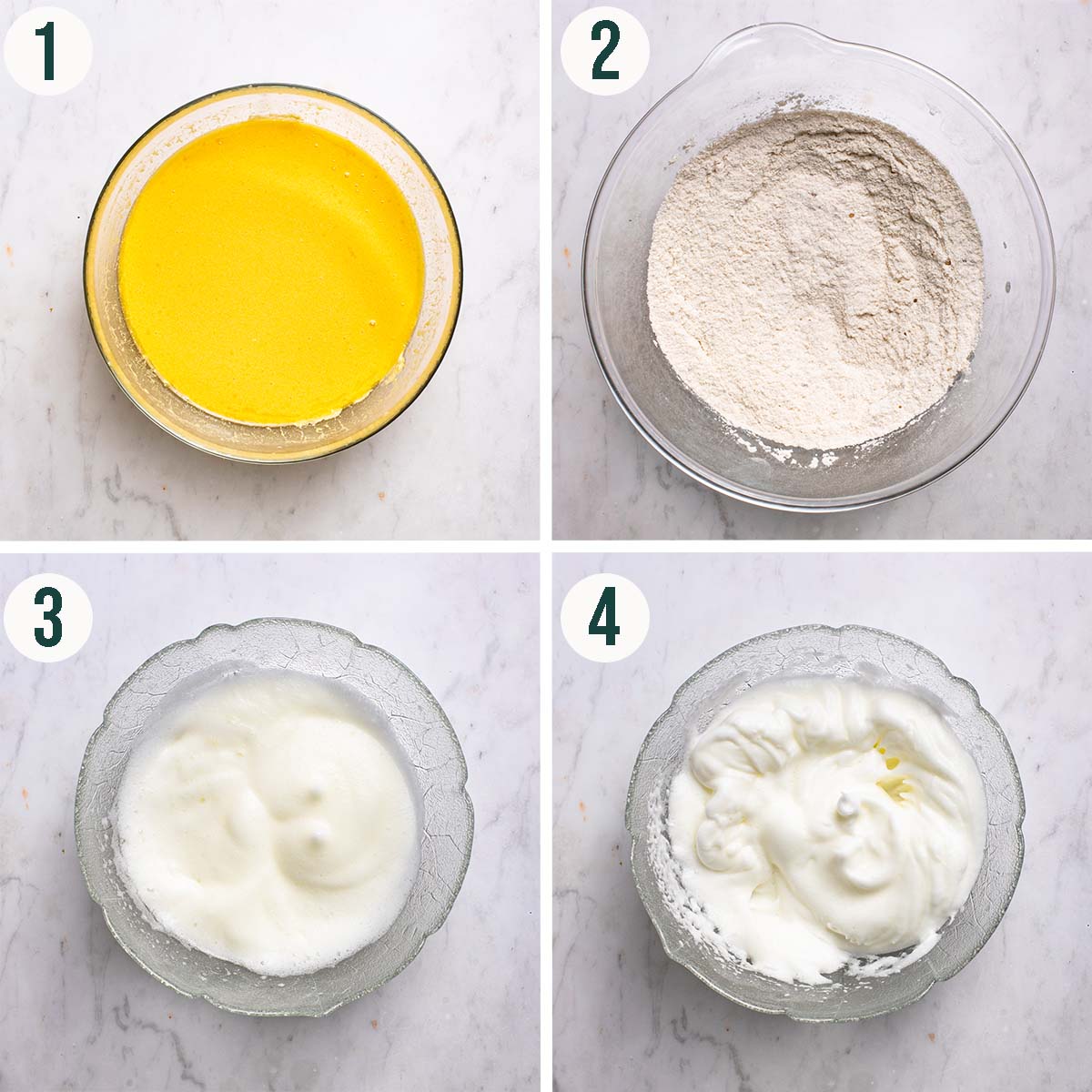
Step 1: mix the milk, melted butter, oil, starter, egg yolks, and vanilla to combine. Make sure everything is at room temperature. Cold milk and eggs will cause the butter to solidify.
Step 2: whisk the flour, baking powder and soda, salt, and sugar together. If using vanilla powder, this is also mixed with the dry ingredients. Adding vanilla to both the wet and dry ingredients of the cake makes for a stronger overall vanilla flavour.
Related: Sourdough Lemon Cake
Step 3: beat the egg whites with sugar on low-medium speed until foamy. Some recipes will call for the sugar to be added partway through mixing but we found in testing that it made no difference and was unnecessarily complicated (it made it much easier to forget to add the sugar).
Step 4: increase the speed to medium and whip until peaks form - this is the point you'd whip to for waffles.
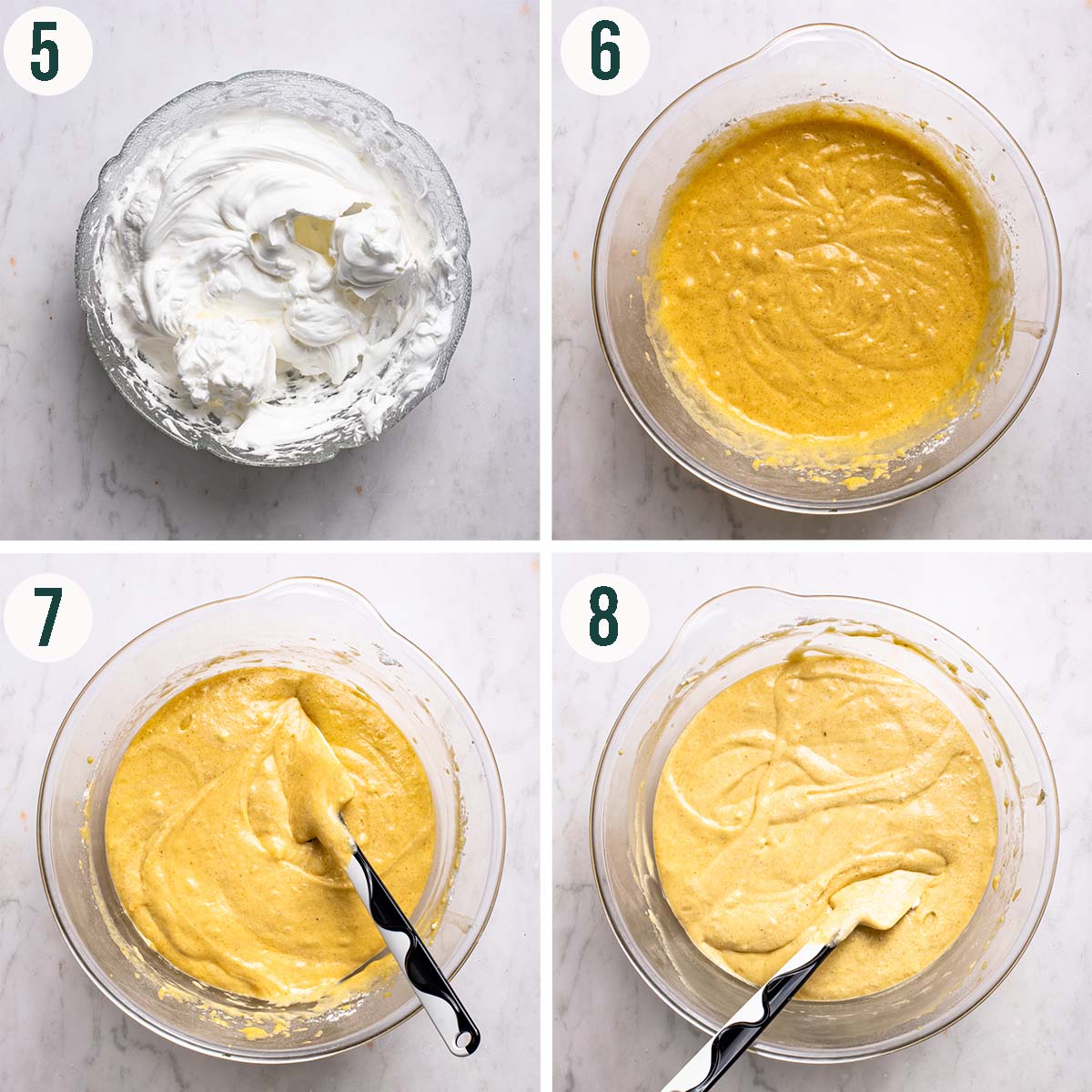
Step 5: continue whipping until stiff, glossy peaks form, like meringue. This is a major element in ensuring the lightness of the cake. I always beat with handheld electric beaters (my stand mixer doesn't have a whisk attachment) but either is great.
Step 6: add the milk mixture to the flour mixture and beat on the lowest speed until just mixed. You can whisk by hand for this step if you have a tendency to over-mix.
Related: Sourdough Chocolate Cake
Step 7: stir a third of the beaten egg whites into the batter, incorporating so that no streaks of white are visible, but trying not to knock all the air out. Use a folding motion.
Step 8: incorporate the remaining egg whites into the batter, again folding them in. The finished cake batter should be a pale yellow and very light in texture, with a much greater volume.
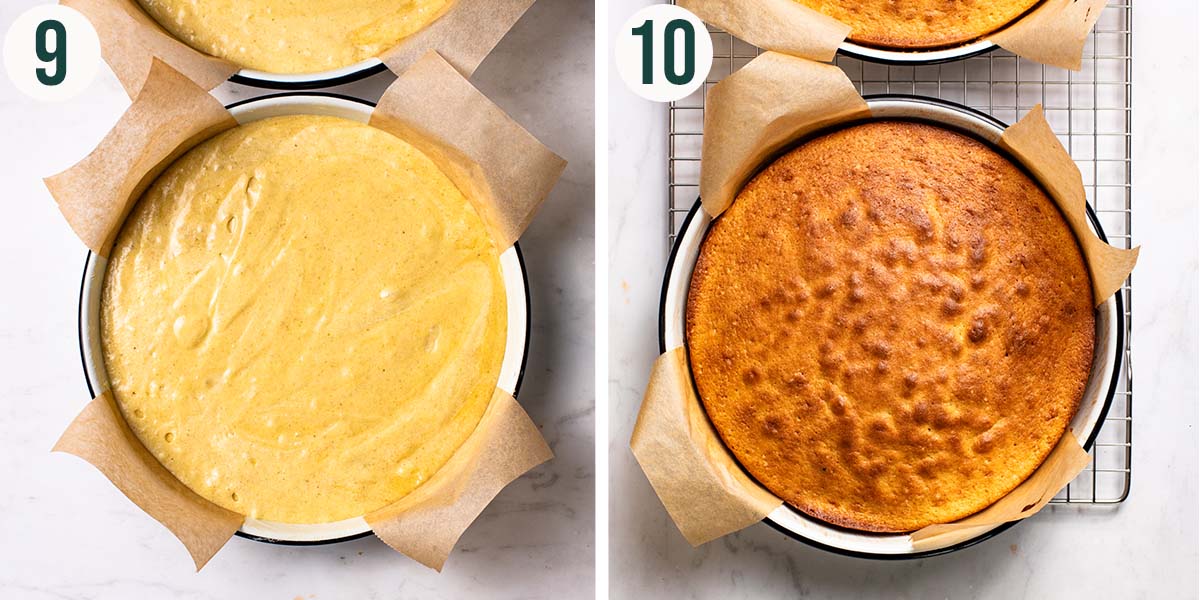
Step 9: divide the batter equally between two lined and greased cake pans. Doing both ensures easy release, so you never have sticking and you won't lose part of the cake when removing from the pan.
Step 10: bake until lightly golden, about 20 minutes. Do a toothpick or skewer test to check that the cake is baked through. The toothpick should come out clean, with no crumbs attached.
Expert Tips for the Best Cake
- Weigh the ingredients: for the best results, always weigh your ingredients, especially for slightly more complicated (and expensive) recipes like this one. Weighing ensures more consistent results versus volume measurements, which are easy to get wrong.
- Use both butter and oil: butter adds flavour, and oil adds moisture. Using a mix of the two makes for a perfect sourdough cake.
- Don't skimp on vanilla: this is a vanilla cake, and it is a lot of vanilla - a full tablespoon - but it's also two cake layers, and you need to taste the vanilla in them.
- Cool before frosting: always cool your cakes before frosting! We know you're probably often in a rush and need to get them frosted and ready to serve, but it only leads to heartache when the frosting melts on the still-warm cake layers. Remember that you can make the cakes well in advance and freeze for later use.
- For room temperature eggs: if your eggs are cold, submerge them in a bowl of warm (not hot) water for 10 minutes before beginning, to bring them up to room temperature. There's no equivalent trick for milk so you'll just have to remember to take it out of the fridge beforehand.
Alternate Frosting Suggestions
- For a slightly sharper frosting that works especially well on the outside of the cake, try chocolate cream cheese frosting. You might be surprised by how good regular cream cheese frosting is with vanilla cake too. Try either with fresh berries.
- Use mascarpone cream or chantilly cream for a less sweet option. You can pair these with lemon curd or orange curd fillings.
- For a purely vanilla cake, use this easy vanilla frosting recipe instead of the chocolate buttercream.
More Sourdough Discard Recipes
Sourdough Vanilla Cake
Equipment
- Measuring cups and spoons or a digital kitchen scale
- 3 Mixing bowls
- Electric hand or standing mixer
- 2 9 inch (23 cm) round baking dishes
- Wire rack
- Spatula
Ingredients
- 300 grams cake flour
- 1 ¼ teaspoons baking powder
- ¼ teaspoon baking soda
- ¼ teaspoon fine sea salt
- 1 teaspoon vanilla powder, see note
- 350 grams granulated sugar, divided
- 250 ml milk, room temperature
- 1 teaspoon apple cider vinegar
- 3 large eggs, separated, room temperature
- 3 egg yolks
- 150 grams salted butter, melted and cooled to room temperature
- 100 grams sourdough starter
- 2 tablespoons oil, avocado or vegetable
- 2 teaspoons vanilla extract
Instructions
- Preheat the oven to 350°F (180°C) and grease and line 2 9-inch (23cm) cake pans with parchment paper. Grease the paper again with butter. Set aside.
- In a large mixing bowl, whisk the flour, baking powder, baking soda, salt, vanilla powder, and 300 grams (1 ½ cups) sugar to combine. Set aside.300 grams cake flour, 1 ¼ teaspoons baking powder, ¼ teaspoon baking soda, ¼ teaspoon fine sea salt, 1 teaspoon vanilla powder, 350 grams granulated sugar
- Mix the milk and vinegar and set aside for a few minutes to curdle.250 ml milk, 1 teaspoon apple cider vinegar
- Separate the eggs. Place 3 egg whites in a mixing bowl and set aside. Place 6 egg yolks into another mixing bowl. Make sure no egg yolk has gone in to the egg white bowl.3 large eggs, 3 egg yolks
- Add the milk, cooled melted butter, starter, oil, and vanilla to the egg yolks. Whisk to combine and set aside.150 grams salted butter, 100 grams sourdough starter, 2 tablespoons oil, 2 teaspoons vanilla extract
- Add 50 grams (¼ cup) sugar to the egg whites. Use electric beaters or the whisk attachment on your standing mixer to beat on low speed until foamy. Increase the speed to medium and continue beating until peaks form. Continue beating until stiff, glossy peaks form, another 3 minutes or so.
- Pour the egg yolk mixture into the flour mixture and whisk to just combine.
- Add ⅓ of the egg whites to the cake batter and use a spatula to stir to incorporate. Add the remaining egg whites and gently fold them into the batter, trying not to knock the air out. There should be no visible streaks of egg white. The cake batter should be very light and fluffy when the egg whites are incorporated.
- Divide the batter equally between the two prepared cake pans and smooth the tops with a spatula.
- Bake on the middle rack for 20 to 22 minutes, checking with a wooden skewer or toothpick that they're baked through before removing from the oven.
- Cool on a wire rack for 15 minutes before carefully removing from the pans, removing the parchment paper, and cooling fully on the rack. I recommend covering lightly with a cotton or linen tea towel - this lets the heat escape without drying out the cakes as they cool.
- Once the cake layers are fully cooled, frost with chocolate buttercream or your desired frosting or icing. The chocolate buttercream recipe is the right amount for a 2-layer cake.
Notes
Nutrition
Nutrition information is an estimate and is provided as a courtesy. For precise nutritional data, please calculate it independently using your preferred nutrition calculator.
This post may contain affiliate links. If you purchase through these links, we may earn a small commission, at no additional cost to you.
 Did you make this recipe?Please consider leaving us a rating and a comment. It helps others find our work, which genuinely supports what we do. Thank you!