
Buttery, sweet, and with just the right note of lavender, these floral lavender shortbread cookies are made with ground edible lavender buds. The cookie dough needs to be chilled before baking so plan in advance.

Recipe Rundown: Lavender Shortbread
Prep Time
30 minutes
Bake Time
30 minutes
Chilling Time
4 hours
Servings
48 cookies
Difficulty
Easy
Calories
64 kcal*
Primary Ingredients
Butter, powdered sugar, dried lavender, flour, and vanilla.
*Calories are an estimation.
How This Recipe Works

Lavender is such a sweet, delicate flavour but it also has a bit of citrus and mint, and it can be surprisingly complex. The trick when using lavender (or rosewater, or almond extract, and so on) is not to overdo it. Lavender shortbread should have a lavender note, not be overwhelmingly floral.
We grind the dried lavender buds, of course, because you don't want to bite down on a whole bud of lavender when you're eating a cookie. Otherwise this is our go-to shortbread recipe with plenty of butter and a method that calls for chilling before slicing and baking.
The high butter content means that the cookie dough needs to be chilled before baking, or the cookies will spread too much. This is typical for most shortbread cookies and other slice-and-bake cookie recipes but it does mean that you need to set aside enough time for that. These are adapted from our cardamom cookies and Earl Grey shortbread.

Ingredients You'll Need and Why
One of the best things about shortbread is the short ingredient list - even with the added lavender, you only need 5 ingredients total. These are our notes from recipe testing and you can find the full recipe card below with complete measurements and instructions.
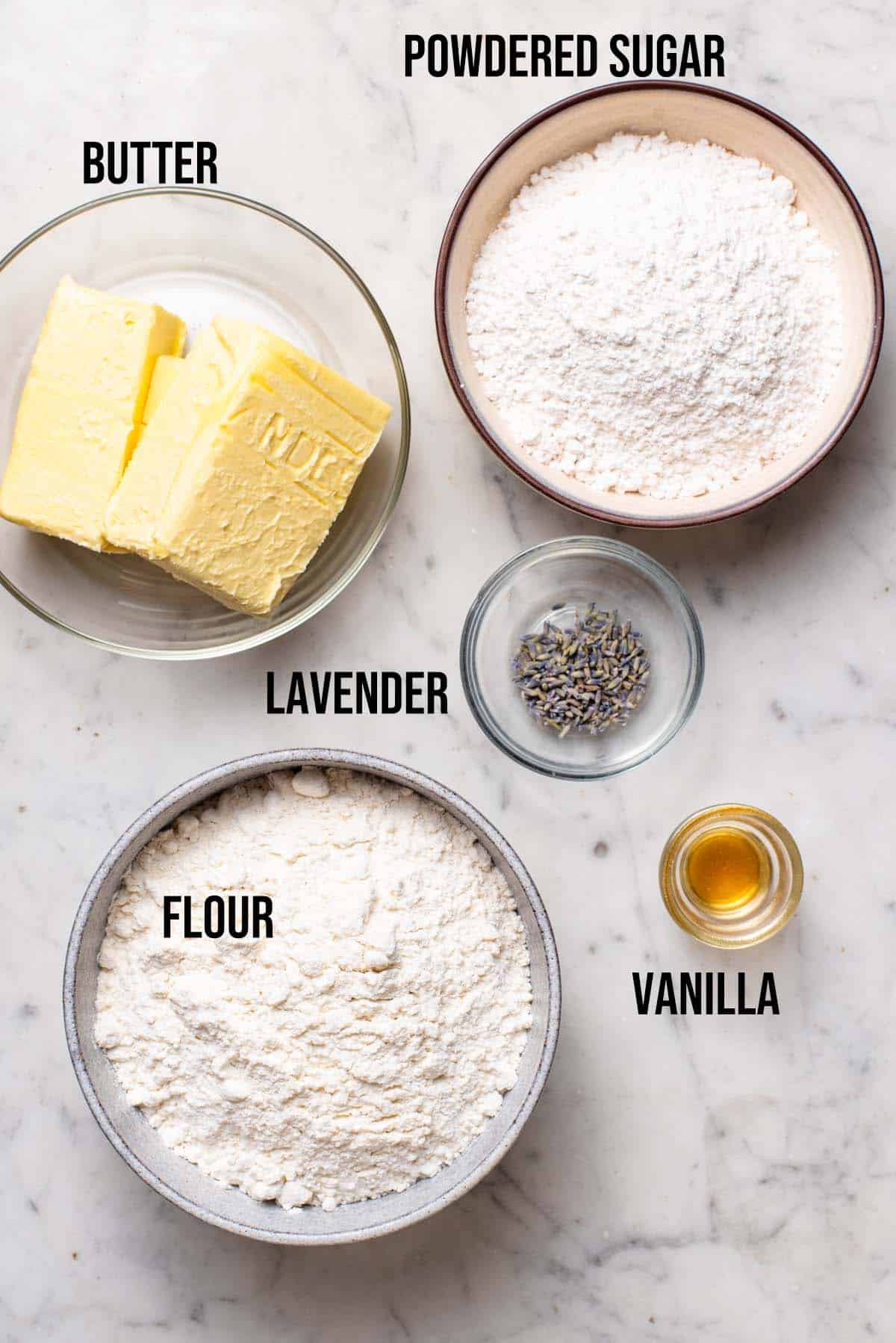
- Butter: use salted butter. It should be a good quality butter because it's the primary flavour after lavender. The butter needs to be at room temperature.
- Sugar: powdered, icing, or confectioner's sugar, depending on where you live. This recipe has been developed specifically with icing sugar and it makes for a more delicate but less crumbly cookie. See our pecan shortbread for a version made with brown sugar.
- Flour: this should be all-purpose white flour. Pastry flour makes the cookies too delicate.
- Lavender: make sure you're using dried lavender buds that are labelled for food use, not for crafts. For the best taste it should be from a freshly opened package. Of course you can also use your own dried lavender if you have plants. We haven't tested with fresh lavender.
Use the JUMP TO RECIPE button at the top, or scroll to the bottom of the post to see the printable recipe card with full ingredient measurements and complete instructions.
How to Make Lavender Shortbread
This is a familiar method for shortbread, where the butter is creamed before adding the other ingredients. The butter must be at room temperature. If it's too cold, it won't cream, and if it's too warm, the cookies will be greasy.
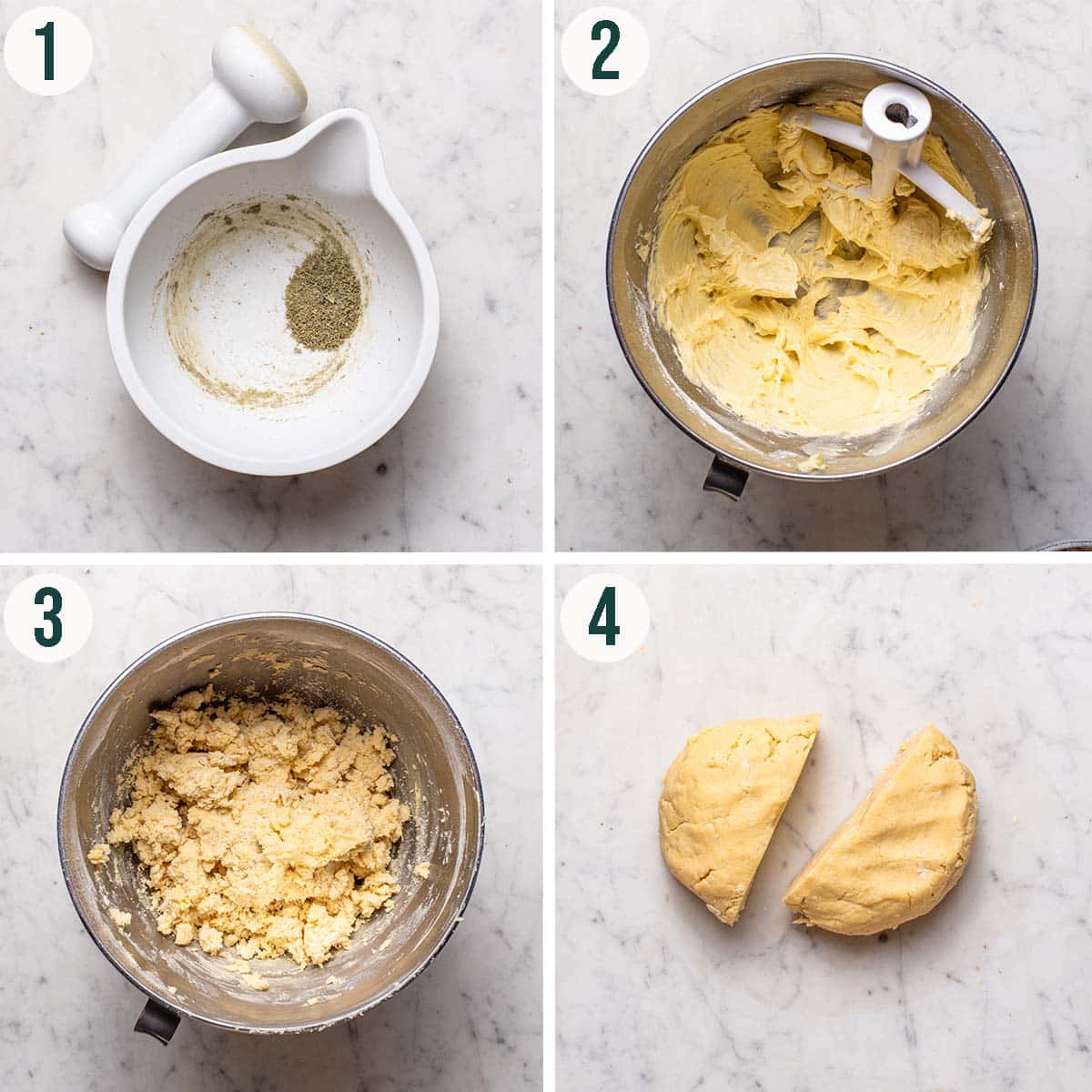
Step 1: grind the dried lavender into powder with a mortar and pestle. If you don't have a mortar and pestle you can grind the lavender into the sugar with a small food processor or mini blender.
Step 2: cream the butter on high speed until lighter in colour and increased in volume. This takes several minutes with an electric mixer but you can do it by hand if needed - just note that it might take 10 minutes by hand.
Step 3: mix in the sugar, lavender, and vanilla on low speed, then mix in the flour also on low until just combined. The dough should look crumbly but it'll hold when pressed.
Step 4: working quickly, press the dough into a disc, then divide into two approximately equal pieces. The edges might look a little craggy but that's normal. The dough will come together more fully in the next step.
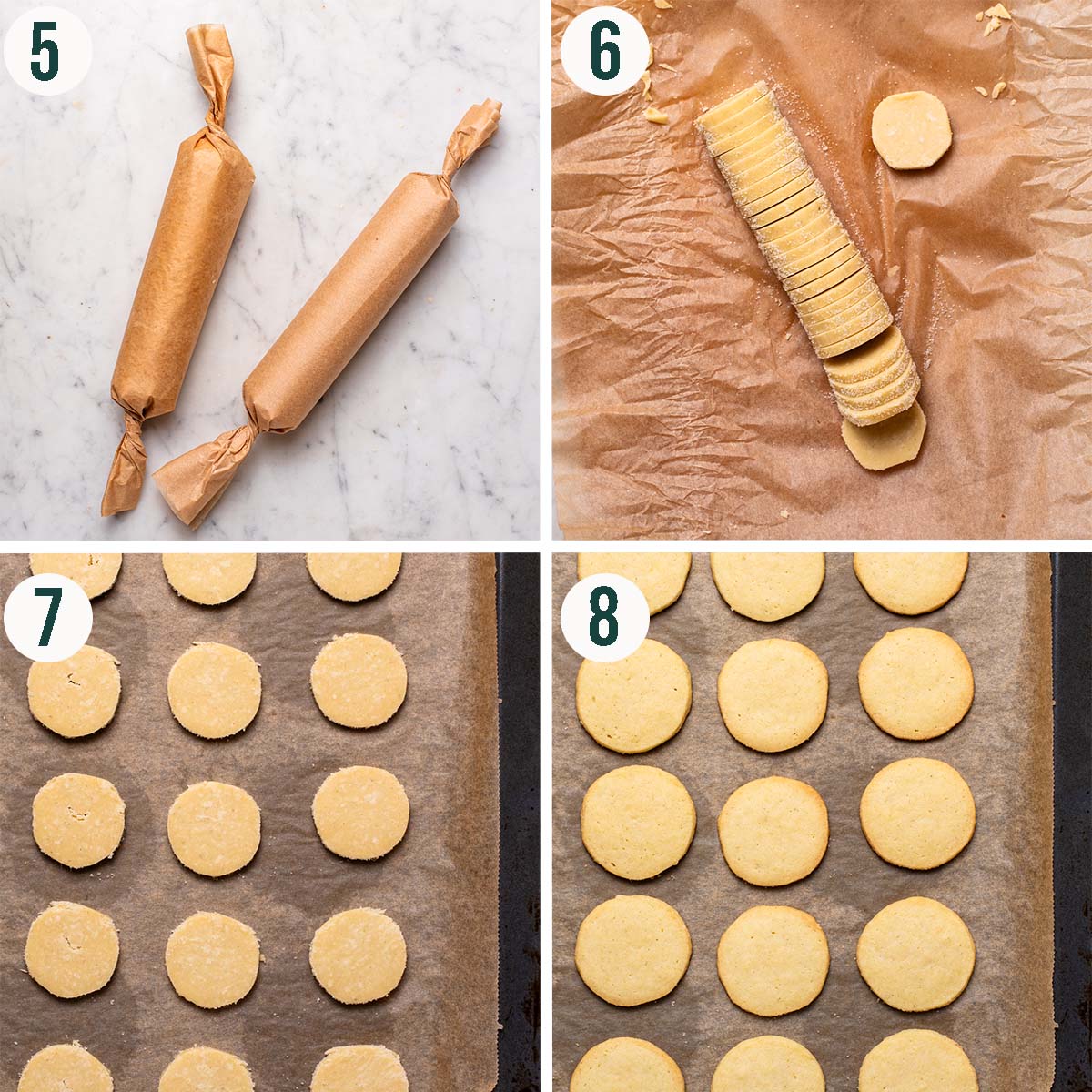
Step 5: place the dough onto sheets of parchment paper, then roll gently to form logs. Twist the ends of the paper tightly and then refrigerate. We prefer this method to using plastic wrap and you can bake the cookies on the parchment paper used for chilling.
Step 6: slice the dough into rounds, about 24 cookies for each log. To keep the cookies more round, rotate the log a quarter-turn every time you slice a new cookie. This isn't very important because they will spread slightly in the oven anyway.
Step 7: place the cookies onto a lined baking sheet, leaving some space between each for a little spreading. If you can only bake one tray of cookies at a time, either leave the second log in the fridge until you're ready to slice and bake, or refrigerate the second tray of cookies before baking.
Step 8: bake until just lightly golden around the edges. Cool for a few minutes on the baking sheets before carefully transferring the cookies to a wire rack to cool fully. Once cool, you can add glaze or icing. Pictured is a simple icing sugar and lemon juice drizzle. Some of our taste-testers preferred the cookies with the glaze as it does provide a more acidic contrast to the sweet cookies.

Expert Tips for the Perfect Lavender Cookies
- Don't increase the lavender: floral flavours should be subtle and delicate, not punchy. Too much dried lavender will make the cookies taste like soap. If you find that the taste isn't pronounced enough, it's probably because the dried lavender was old - it should smell strongly floral when you open the package.
- Use freshly opened lavender: the best way to get edible dried lavender buds is by looking for it in the tea section of a store or at a tea shop. It's often sold as a type of herbal tea and the lavender used for that is definitely edible, will be pretty fresh, and will have the best flavour.
- Stick to the recipe amounts: altering the ingredients even by a little bit will make for cookies that don't turn out as expected. Shortbread is tried-and-true and trying to change something like the amount of butter or reducing the sugar will make for cookies that turn out differently from those pictured. Weighing is best by far.
- Don't knead the dough: shortbread should be made with light, quick hands, and handled as little as possible. Over working will lead to tough cookies and you want snappy, melt-in-your-mouth shortbread.
More Cookie Recipes
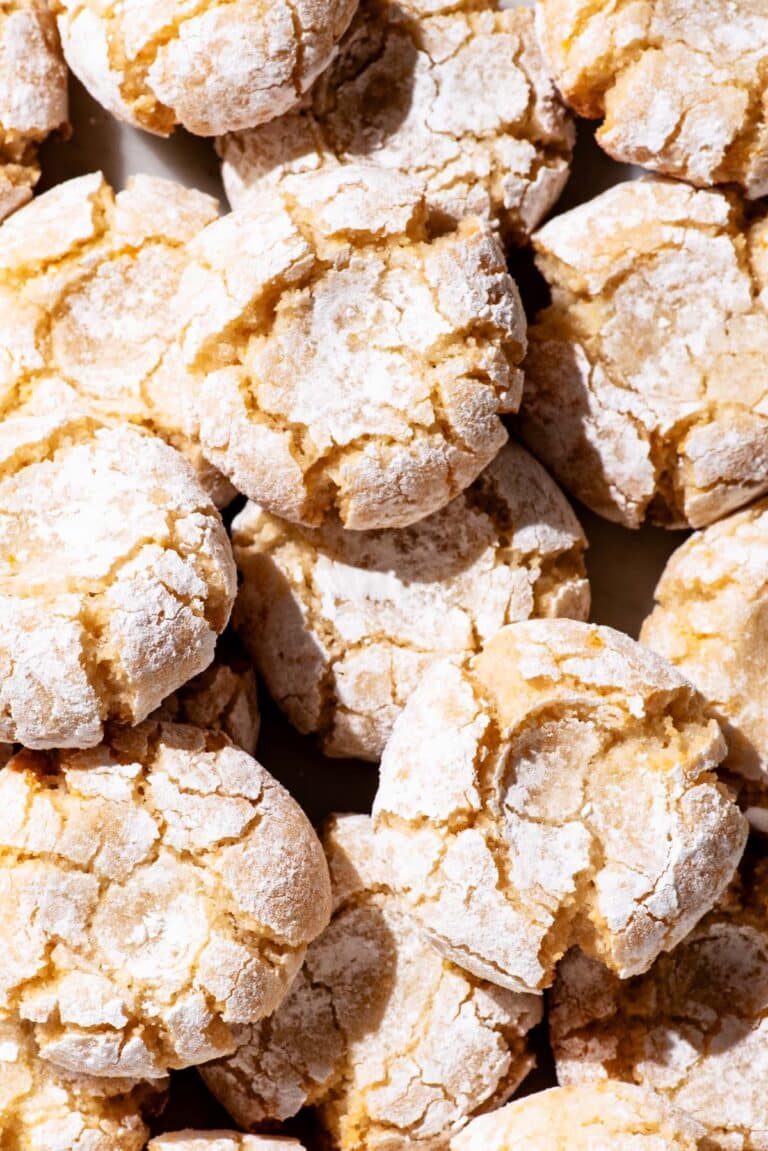


If you make this Lavender Shortbread Cookies recipe or any other cookie recipes on the Baked Collective, please take a moment to rate the recipe and leave a comment below. It’s such a help to others who want to try the recipe. For more baking, follow along on Instagram, TikTok, and YouTube.
Lavender Shortbread Cookies
Equipment
- Measuring cups and spoons or a digital kitchen scale
- Electric hand or standing mixer
- Mixing bowl
- 2 baking sheets
- Wire rack
Ingredients
- 1 ¼ teaspoon dried lavender buds
- 1 cup salted butter, room temperature
- 1 teaspoon vanilla extract
- ¾ cup powdered sugar
- 2 cups all-purpose flour
Instructions
- Grind the lavender into a fine powder with a mortar and pestle and set aside.1 ¼ teaspoon dried lavender buds
- Cream the butter in a large mixing bowl until light and fluffy, 4 to 5 minutes. Use an electric mixer or the paddle attachment on your standing mixer.1 cup salted butter
- Beat in the vanilla and ground lavender, then beat in the sugar. Start on low speed and increase to medium once the sugar has been mostly incorporated.1 teaspoon vanilla extract, ¾ cup powdered sugar
- Add the flour and mix on low until just combined. Don't over mix. The dough should look crumbly.2 cups all-purpose flour
- Use your hands to quickly shape the dough into a rough ball. Divide into two approximately equal pieces.
- Shape each half into 7-inch (18 cm) long logs. Roll each tightly in parchment paper, beeswax wrap, or plastic. Don't worry if they're not perfectly rounded, wrapping them in the paper will help. Twist the ends tightly.
- Refrigerate the cookie dough logs for at least 4 hours or up to 24 hours.
- Once the cookie dough has chilled, preheat the oven to 350°F (180°C). Line two large baking sheets with parchment paper. If you used parchment paper to wrap the cookie dough logs in, use that to line the baking sheets.
- Optionally roll the logs in raw sugar. Slice each log into ¼ inch (5mm) thick cookies and place 1 inch (2.5cm) apart on the lined baking sheets.
- Bake for 10 to 12 minutes, or until the edges of the cookies are just turning lightly golden.
- Cool for 5 minutes on the baking sheets before removing to cool fully on wire racks. If icing or adding a glaze, wait until the cookies have cooled fully.
Notes
Nutrition
Nutrition information is an estimate and is provided as a courtesy. For precise nutritional data, please calculate it independently using your preferred nutrition calculator.
This post may contain affiliate links. If you purchase through these links, we may earn a small commission, at no additional cost to you.
 Did you make this recipe?Please consider leaving us a rating and a comment. It helps others find our work, which genuinely supports what we do. Thank you!
It would be wonderful if there was a link to save your recipes. It's just a suggestion.
Thanks for the suggestion, Gale, we'll look into it!